Author: Roshaunda D. Cade, Ph.D.

  • How Do You Educate?

    How Do You Educate?

    When hearing the term educator, many people envision a classroom teacher. That’s an accurate depiction of an educator, but it’s not an all-encompassing one.

    I’ve worked in education my entire adult life, even before I graduated from college. As an undergraduate, I was an RA in several different types of residence halls, and I tutored at a local after school program.

    After graduation, I worked as a hall director, director of minority affairs, and early alert coordinator at a local college. I didn’t set foot in a classroom, at least not as an instructor, but I worked as an educator, nevertheless, ensuring programming, diversity, safety, and academic success for the entire school community.

    After that endeavor, I started graduate school and worked as an instructor for many composition and African American Studies courses at several universities. Before completing my doctorate, I got a job directing a university writing center.

    Since then I’ve led two university writing centers – one an on-ground center with mostly student staff, and the other an online center with an entirely professional staff – and realized I love to help people gain confidence and courage in their writing.

    Although this reads like a straightforward path, my trajectory as an educator has been circuitous. I’ve also worked in a faculty development center and as an assistant director in an academic resource center. I’ve been a high school teacher. I’ve served on a vision committee trying to start a new school, and I’ve served on a Title I committee at an all-girls urban charter school.

    As an educator I’ve taught classes, but I’ve done so much outside of the classroom, too.

    Educators are teachers, but we do not only teach in classrooms. We are librarians (my high school librarian transformed my life), and cafeteria workers (I know a cafeteria worker who spends her free time pondering how to positively impact students in the few seconds she shares with them through the day), and deans (a dean once advised me to study what I loved, and that made all the difference), and department administrators (one department administrator made my 4 years of undergraduate feel like home), homeschoolers (a homeschool dad challenged me to reimagine what makes a good education), and on, and on, and on.

    How do you educate? What roles do you play?

    No matter how you educate, LELA House is here to care for you as you care for others.

    ***

    Here’s some inspiration for those who inspire – 15 Empowering Maxims for Education Mavericks.Roshaunda D. Cade, Ph.D. is an educator, writer, and creator.  She lives in St. Louis, MO with her husband and teenage children and enjoys reading, writing, dancing, and pushing her creative boundaries.  You can follow her at roshaundacade.com, lela-house.com, and on Teachable, Medium, Youtube, and Instagram.

  • Introducing Writing I2Oh!

    Introducing Writing I2Oh!

    I mentioned I was dipping my toes into course creation, and I’m delighted to share with you the launch of my first online course.

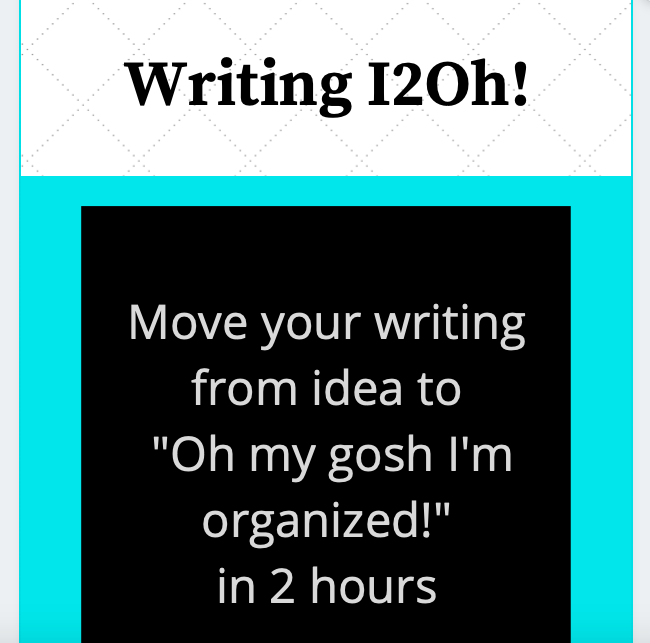
    Writing I2Oh!

    (It’s pronounced Writing Eye Two Oh! – It loses something in a sans serif font – I’ll make sure to work on that for my next course title.)

    What if you didn’t have to struggle to get your thoughts down coherently on paper? With Writing I2Oh!, you don’t have to struggle to get your thoughts down. You’ll learn how to turn your writing from idea to “Oh my gosh, I’m organized!” in as little as two hours.

    Since LELA House is a virtual home for people who imagine education differently, I think of Writing I2Oh! as a supplement to secondary ELA education, as well as a way for writers of all kinds to get a handle on their ideas. Writing I2Oh! can work for bloggers, advanced students, and academic writers, too.

    In Writing I2Oh! I demonstrate the process I go through to get an idea out of my head and onto paper, which is also the process I’ve used with hundreds of students over the years. If you or someone you know struggles to move from idea to organized, please check out Writing I2Oh!

  • What’s Your Story?

    What’s Your Story?

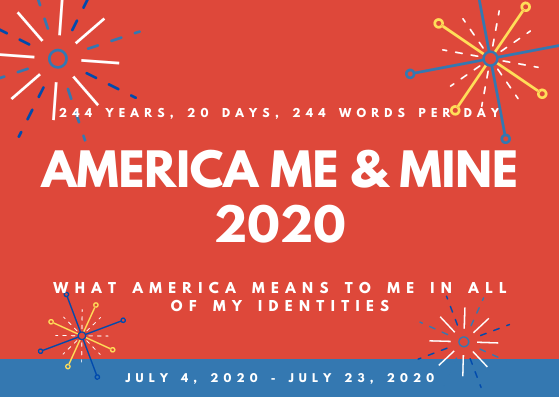
    I created a writing challenge for myself – America Me & Mine – to write 20 244-word blog posts about what America means to me. If you’d like to learn more about it and even join me, you can get more information here. I’d love to have you join me!

    Today’s post was about storytelling. We all have stories to tell. Goodness, that’s part of what LELA House is about – helping people understand and be understood – and storytelling is a great way to do just that.

    And I’m here to help people tell their stories. I think that is ultimately why I enjoy helping people write and why I’m venturing into course creation – because I get to help people share their stories with the world.

    What is your story, and how can I help you tell it?

  • Something Old, Something New

    Something Old, Something New

    The online journal I use sends me daily flashbacks of journal entries. The following is my entry from July 4, 2016.

    I mean, what do I want really?  Really?  I want to follow God wherever He leads me.  I want to bridge high school and college.  I want to help people learn to become better writers (although, really, I’m not sure why I care about that so much, but I do).  I think it’s because in the process of becoming better writers, we become better people who learn to get in touch with who we are and who we are in community.  By learning to express ourselves better in writing, we learn to think better and dream better and love better, and explore better, and live better.  In learning to write better we learn to look for purpose and meaning in the world and in ourselves.  Writing is a gateway to exploring the fullness of our humanity and how God divinely orchestrates our roles in the world.  Learning to write better enhances our ability to be and think and do and create, to understand we have purpose and to fulfill it.  Writing is living at its fullest, and being able to help people live is a worthy endeavor, indeed.

    I still find helping people write a worthy endeavor.

    I also still want to bridge high school and college, too.

    Actually, I want to bridge all kinds of levels of education and help people, whether they are in or are out of school, keep on reading, writing, creating and learning.

    To that end, I’m working on something new to offer you through LELA House. I’m dipping my toes into course creation.

    I’ll keep you posted on what’s coming up. In the mean time, if there’s a course you’d like to see, please comment and let me know what’s interesting for you. And please, keep on living, reading, growing, writing, exploring, loving, dreaming, and becoming who God created you to be.

  • Seek to Serve

    Seek to Serve

    We are called to serve, but we can only serve out of abundance, not lack.  An empty vessel has nothing to pour. Leaders who don’t understand they need fuel to thrive or how they provide value cannot serve well.

    How can you serve?

    Start with what you’re good at.

    Sometimes we think service must look like ministering to people who are homeless, hungry, or otherwise distressed.  And it absolutely can and should. But that doesn’t mean that’s the only way to serve.

    What are your talents?  Cooking? Knitting? Painting? Speaking? Calculating? Building?  All of those are avenues for service.

    Are you good at less tangible things, like reassuring, validating, and comforting?  Everyone needs encouragement, a listening ear, a means of self-expression.  Filling those needs for people is service.

    Consider Jesus, the ultimate servant leader.  Jesus fed hungry multitudes with miraculous wonder, but He also cried with mourning friends.  Both actions, one miraculous, and the other mundane, exemplify service. 

    To serve others, leaders must 

    1. Practice self-care – sleep, hydration, nutrition, and prayer are great starting points.
    2. Discover their unique service design – diving into what you’re good at is a great place to begin.
    3. Recognize service opportunities when they present themselves – service doesn’t always look like salvation (whether your goal is to save people from their circumstances or save them from their sin).
    4. Act – do the things God placed you on the planet to do.

    Leaders don’t serve for the sake of receiving recognition or accolades; they serve for the sake of others.

  • Learning to Lead Your Lizard Brain

    Learning to Lead Your Lizard Brain

    Yesterday I attended the first session in a Master Mind Institute webinar series about neuroscience and life coaching. I learned fresh ways to consider and discuss emotions, and I’m excited to align my new learning with the lessons I gleaned from Susan David’s Emotional Agility.

    The amygdala is an almond-shaped, almond-sized section of the brain that houses emotional experiences and responses. The word amygdala derives from Latin for almond, which I find fascinating. I imagine scientists of yore plotting various parts of the brain and their functions saying, “Yeah, we know this part of the brain deals with emotions, but instead of naming it for emotions, let’s name it something less intimidating. Almonds are not at all intimidating, and it looks like an almond, so….” So now we have an almond directing our emotions.

    This emotional center is also known as the lizard brain (score another point for cool scientists and their nomenclature), which determines the fight-or-flight response.  In determining fight or flight, the lizard brain intertwines emotions and learning.

    An example given in the webinar depicted a person walking around gathering plants and provisions and stumbling upon a lion. The lizard brain kicked in with the emotions of stress and fear, helping the person to decide whether to fight or flee. The person in the scenario chose to flee (which makes sense to me), but while fleeing, the person had to pay attention to where in the savanna she was, the time of day, directionality, topography, etc. In other words, she needed to learn how to avoid the lion while she fled from it.

    Learning and emotions have never been separated, yet we often think of them as discrete. Because they share a neurological link, we can learn how to manage our emotions. First, we must accept that an almond-sized lizard directs synaptic emotional traffic in our brains.

    You will have an emotional response when your status quo gets disrupted. You are hard-wired to do so. What you do with that emotional response, however, determines whether you grow and transform or become stagnant and stuck.

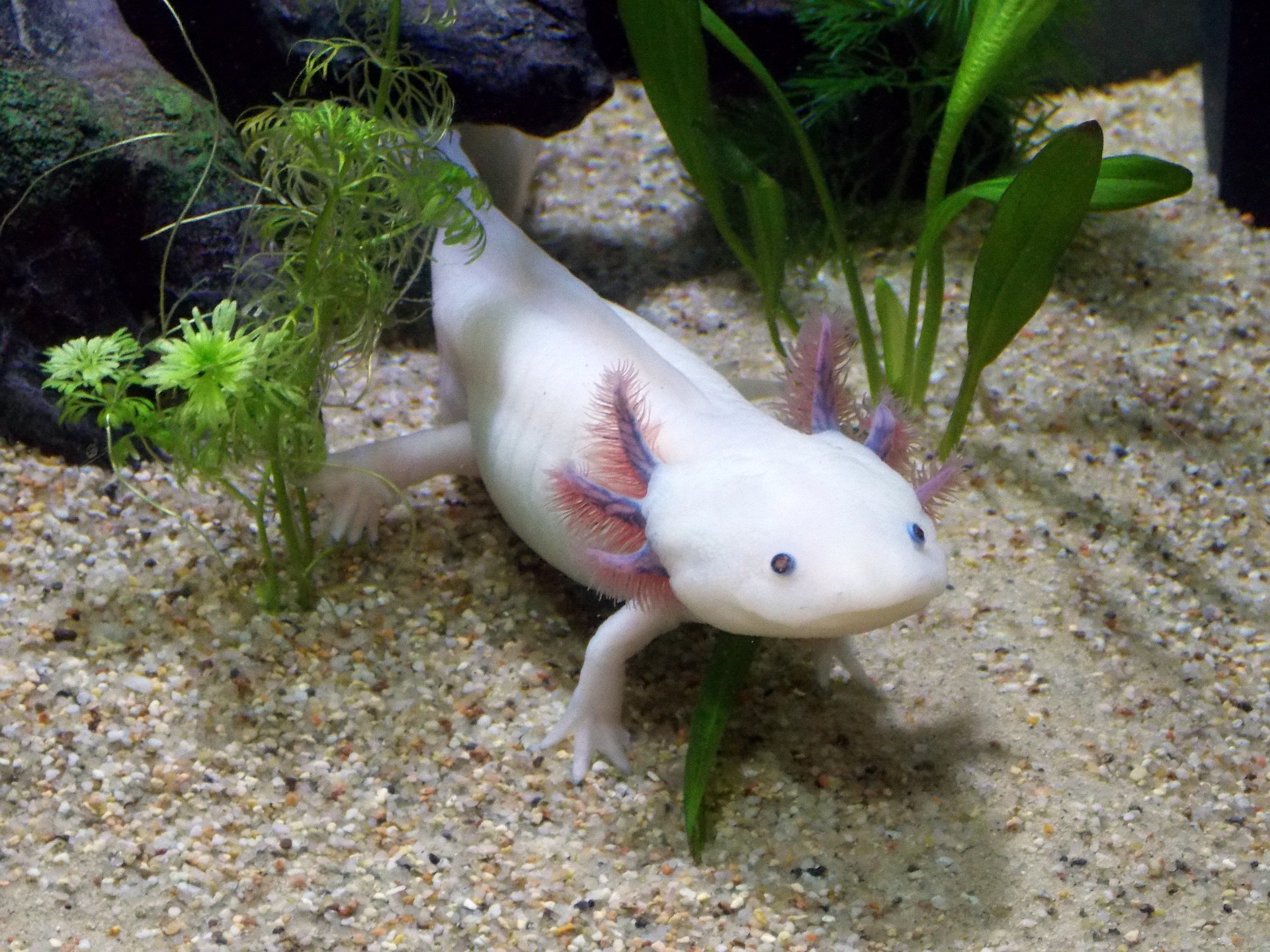
    Dealing with your emotions doesn’t need to be scary. From now on, I will picture my emotions as a cute almond-sized axolotl (albeit an amphibian) on a mission to help me navigate my world.

    What about you? The first step to transformation is acknowledging your emotions influence you. The next is to realize how they influence you.

    To partner with someone who can help you figure out how to manage your emotions and transform your life, contact me. I would love to join you on your journey.

    If you like what you read and believe others will, too, please share.