Category: Writing

  • Journaling and Reading Offer the Benefit of Risk in the Safety of Privacy

    Journaling and Reading Offer the Benefit of Risk in the Safety of Privacy

    My friend had planned an escapade and somehow convinced me to go along. I would get permission to spend the night at her house. I spent much of my time at her house, anyway. I ate dinner over there, probably as much as I ate at my house. Check. After dinner, we would take our sleeping bags out to their backyard fort to sleep under the stars. Check. Then we would sneak out of her back fence, walk halfway to her boyfriend’s house, and meet him and his best friend at a predetermined location for my friend and her boyfriend to do whatever it is 8th grade lovers did in the 1980s.

    We executed steps one and two flawlessly. I’m surprised I made it through dinner without tipping off her parents, though. I had on all black, because I figured I needed to be in ninja mode if I were sneaking out of houses and walking through town in the middle of the night. And I was jumpy. Her parents probably chalked it up to my being an 8th grader, as 8th graders are not known for their rational behavior.

    Things got dicey once we got out to the backyard. We hauled our gear into the fort with no difficulty, but as we descended the fort’s ladder prior to leaving the yard, my friend’s dogs started nosing around us. At the time she had three basset hounds. Two were named Bonnie and Clyde, but I forget the name of the third. All three were related in some weird incestuous way my friend assured me was normal for dogs, but I remained skeptical. I suppose the dogs sensed our nervous energy, because they wouldn’t leave us alone. They wanted to play, nipping at us, yipping, and making it impossible to leave out the back gate.

    We eventually got the dogs into a far recess of the yard and sauntered over to the gate with about as much cool as Baby saying, “I carried a watermelon” in Dirty Dancing. We dashed open the gate to make a break for it, but the dogs bounded through before we could shut it. Two stage whispering 8th grade girls and three yowling basset hounds took to the neighborhood streets that night. I’d never seen my friend’s dogs move more quickly than a jog, so watching them bolt through the streets like they had zombies at their tails mesmerized me.

    The dogs separated into two different directions. My friend went after the duo, pausing long enough to shake me out of my reverie and shoo me after the other one. At that point in my life, I’d never had a pet – not a fish, not a hamster, nothing. I ran after that dog with no idea what I would do if I caught up with it. It turned out I would do nothing. In the time it took me to catch up with one dog, my friend had caught the other two, corralled them in her yard, and found me still running after the last dog. She collared it, and we rushed back to her yard, lamenting our long-past rendezvous time.

    We eventually made it out of the back gate only to find my friend’s boyfriend and his friend standing on the other side of the fence waiting for us. About 30 feet away from my friend’s back gate was a median marking the entry to the neighborhood. We settled there, with my friend and her boyfriend on one side of the neighborhood sign, and his friend and me on the other. Despite my ninja gear and nerves, we spent the entire night in our neighborhood, never venturing beyond territory we explored every day.

    Yet that was the riskiest thing I’d ever done. I was certain my mother would kill me if she found out. My mom did a lot of things, but one thing she didn’t do was play. I don’t know that I’ve ever told her this story. If I don’t post any more blogs, you’ll know what happened.

    What I planned to do that night was stupid and deserving of my mother’s ire. What I did, however, really wasn’t that dangerous. I never left my neighborhood. I literally was never more than a few minutes walk from my house. I wasn’t alone. Even when my friend and I separated, I was always within shouting distance of a neighbor who knew me. It wasn’t that late. We probably left my friend’s backyard around 10p and returned around midnight.

    I took risks, and I learned from them. But I did so in a relatively safe atmosphere. Certainly we risked detection and punishment, and we also risked violence (sexual, physical, and other) from the boys we met. I don’t mean to minimize this, but in our particular neighborhood, at that particular moment in history, with people we knew, the likelihood of a poor outcome was reasonably low.

    Writing and reading can seem similarly risky, but done in the safe atmosphere of a journal and your own personal space, the danger is low. Be honest. Be curious. Don’t censor yourself. Your journaling and reading are for you.

    Many of us understand the risks of writing. What if someone sees what I write? What if they don’t like it? What if they don’t like me? What if I offend them? What if I’m not good at writing? What if this is bad? Who am I to write on this subject? Who am I to consider publication? All of those fears from your internal critic can keep you from writing, but a journal isn’t a public forum. A journal is a private, safe, judgment-free space for you to write out your heart. To try out new styles. To test out new genres. To tackle unusual ideas. To dive into your soul. To find out who you really are.

    Reading comes with its own risks. What does it say about me that I only read this genre? What will it say about me if I try out different genres? What about genres I’ve always been afraid to try? What if I fall behind on my necessary reading by pursuing pleasure reading? What if this is frivolous? What will I learn? How will that change me? Who will I become? Those fears also stem from your internal critic, but your personal reading time is your safe, judgment free space to reinforce neural pathways. To explore. To think. To wander. To dream. To learn. To grow.

    If I could go back to 8th grade, I wouldn’t agree to traipse around town to meet up with some boys, but I also wouldn’t erase our adventures that night. They showed me parts of myself I didn’t know, and the risk was worth the reward. Likewise, you are worth risking confrontations with your inner critic to gain the benefits of transforming yourself through the safe spaces of journaling and reading.

    * * *

    I am doing a 31-day series on reading and journaling as self care for educators. Each day of the series has bonus journal prompts. Click to join the LELA House family of educators committed to nourishing their reading, writing, and creative souls. You’ll receive a link to the journal prompts and gain early access to upcoming LELA House ideas, courses, and products. You only need to subscribe once. I will add a new worksheet each day to the access link.


    Roshaunda D. Cade, Ph.D. is an educator, writer, and creator.  She lives in St. Louis, MO with her husband and teenage children and enjoys reading, writing, dancing, and pushing her creative boundaries.  You can follow her at roshaundacade.com, lela-house.com, and on Teachable, Medium, Youtube, Pinterest, and Instagram.
  • Stories as Powerful Self Care

    Stories as Powerful Self Care

    My students were working on invention and thesis statements in class one day. I had 17 variations of the following conversation in one class period. It’s a wonder we had the opportunity for all of those discussions between the blasted bells.

    Student: I don’t know what to write about.
    Me: Have you thought about it?
    Student: I can’t think of anything.
    Me: Fortunately for you we’ve dedicated this entire class period to invention.
    Student: Oh.
    Me: Have you tried any of the invention strategies we talked about yesterday?
    Student: No.
    Me: Why not?
    Student: I didn’t think about it.
    Me: Why not?
    Student: I don’t know.
    Me: Well, why don’t you think about it right now?
    Student: Like right now?
    Me: Yes. This is the time for you to think about it. You won’t think about it later if you don’t think about it right now.
    Student: I would.
    Me: Really? That’s great to know that you’ll think about it later after you’ve done some good thinking on it right now.
    Student: So I have to think about it right now?
    Me: Yes. Which invention strategy seemed good to you yesterday?
    Student: I don’t remember what they were.
    Me: Go ahead and look that up in your notes.
    Student: We were supposed to take notes?
    Me: You’re always supposed to take notes.
    Student: Oh.
    Me: Tell me what you remember from our discussion yesterday.
    Student: I don’t know. I guess the circles.
    Me: Tell me more about the circles. Help me understand what you’re talking about.
    Student: You know.
    Me: No, I don’t. Explain to me what you mean about the circles. What was important about the circles?
    Student: You put your ideas in the circles and then more ideas in more circles.
    Me: Do you mean mind mapping?
    Student: I guess.
    Me: Well that’s a great invention strategy. What else can you tell me about mind mapping?
    Student: I don’t know what it is.
    Me: Sure you do. You just said mind mapping had circles with ideas.
    Student: OK.
    Me: So in mind mapping you just put a bunch of ideas in a bunch of circles? You have one idea over here and one idea over there. Is that how it works?
    Student: No.
    Me: Oh, it’s not? Then tell me how it works.
    Student: You put your big idea in a circle in the middle. Then you put an idea that relates to the first idea in a circle and you connect it with a line.
    Me: Oh, I see. How many circles do you need to have? Just one or two? And what is it called again?
    Student: It’s mind mapping. And you have as many circles as you have ideas.
    Me: That’s cool. So, what’s your idea?
    Student: I don’t know.
    Me: Really? You don’t know what your idea is? I certainly don’t know what your idea is. If you don’t know what your idea is are you sure you have one?
    Student: Yeah. I have an idea.
    Me: So you do know what your idea is. That’s good, because I can’t read minds. Tell me about it.
    Student: I don’t know if it’s good.
    Me: Well tell me about it, and we can figure out together if it’s good or not.
    Student: But I don’t want to tell you if it’s not good.
    Me: But if you don’t know if it’s good or not, how do you plan to find out if you don’t tell me?
    Student: I don’t know if it’s what you want.
    Me: What I want is for you to express your ideas in a coherent manner that other people can understand. But if you’re concerned that your idea isn’t what I want, wouldn’t I be the best person to share the idea with?
    Student: I guess.

    Student finally tells me the idea.

    Me: That’s a great idea.
    Student: So you think it’s good.
    Me: I just said I thought it was great. Do great and good mean the same thing?
    Student: I guess. Well, sort of but not really.
    Me: I think your thinking is great, but you’ll have to do some work to develop it in a way that other people can see how great your idea is.
    Student: So what do I do next?
    Me: What does the assignment say you need to do?
    Student: It says I need a thesis statement.
    Me: Then write a thesis statement.
    Student: But I’ve never written a thesis statement before in the way you’re asking.
    Me: I know.
    Student: But I don’t know how to do it.
    Me: Sure you do. What are the steps I told you to walk through?
    Student: I don’t know.
    Me: Go ahead and look for them on your assignment sheet.
    Student: Like right now?
    Me: Yes, right now.
    Student: Now?
    Me: I can see your assignment sheet poking out from underneath your folder. In the time you’ve asked me “Right now?” twice, you could have pulled it out from underneath your folder and looked it up. Yes. Right now. Go ahead and look for it right now.
    Student: You said we need the thesis statement to include the who, the what, and the why.
    Me: Yes. So once you’ve determined what those are, you’ll be able to write your thesis statement. I can help you think through them if you like.

    Student and I talk through ideas leading to answering the who, the what, and the why.

    Student: But I’ve never written a thesis statement like this before.
    Me: I know. You’ve already told me that. Are you telling me that you’ve never done anything before that you’ve never done before?
    Student: What?
    Me: You just said that you don’t do things that you’ve never done before.
    Student: No I didn’t.
    Me: Sure you did. You’re telling me that you can’t write a thesis statement this way because you’ve never written a thesis statement this way before.
    Student: Well, I haven’t.
    Me: How do you plan on learning anything new if you never do anything you’ve never done before?
    Student: I don’t know.
    Me: You play soccer, right?
    Student: Yeah.
    Me: Do you already know how to do every skill that exists in soccer?
    Student: No.
    Me: Are you telling me there are soccer moves out there that you don’t already know?
    Student: Of course. You don’t learn everything about soccer in one day. You have to learn skills and practice them until you’re good at them, and then you’re ready to learn more.
    Me: Exactly.
    Student: What?
    Me: You come to school to learn. You learn by doing new things in new ways and then practicing them. All of your schooling in your life so far has prepared you for this point. Sure, I’m asking you to do something new, but that’s only because you’re ready to increase your skill. I wouldn’t ask you to do anything I didn’t think you could handle.
    Student: But this is hard.
    Me: Of course it is. Learning isn’t easy; it’s hard work.
    Student: So what do I do next?
    Me: Keep working on that thesis statement. I’ll come back in a few minutes to check on your progress. I can’t wait to see what you’ve come up with.

    I don’t recall what story my student was trying to tell, but I do remember her elation when she discovered how to tell it. She wasn’t one of my talkers. I had a roomful of ninth graders waving their arms, calling, “Dr. Cade! Dr. Cade!” but not this student. She normally sat with her head down, chin-length bangs covering one eye and most of her face, doodling (she was a wonderful artist who gave me masterpieces on each assignment she turned in). But later that class period, she looked up and straight at me. She swiped the hair from over her eye and smiled. I remember her smile. It blossomed big and gorgeous across her face before she realized it, but as soon as she noticed, she tried to hide it by pursing her lips. The joy lingered in her eyes, however, and I walked over to her desk, smiling the whole way, ready to hear her story.

    According to Literary Terms, a story

    is a connected series of events told through words (written or spoken), imagery (still and moving), body language, performance, music, or any other form of communication. . . . Whenever you’re telling somebody about a series of events, you are telling a story, no matter what the subject nor when they occurred. As such, stories are of great value to human culture, and are some of the oldest, most important parts of life. Aside from being a part of every single type of literature, stories are at the foundation of creativity and part of just about everything we do.

    In that moment, my student told multiple stories in various ways – the story of her written words, the story of her spoken words, and the story of her body language. She communicated with me in a way that opened up part of her life, both to herself and to me. She learned she could write a new type of thesis statement, which sparked joy and creativity in her, and I learned a bit more about humanity.

    Literary Terms further contends that “the concept of a story is actually a bit difficult to fully cover or describe. Some would say that life is made up of a series of never-ending stories. From a simple commute to school or work, to all the events of our lives, everything has a story.”

    Stories are everything and everywhere.

    Whether we are telling them or responding to them, stories rest at the foundation of our creativity, our humanity, our very lives. Why not tap into the power of narrative that surrounds us to care for ourselves? Opportunities to read and write are ubiquitous; you already have everything you need to begin.

    ***

    I am doing a 31-day series on reading and journaling as self care for educators. Each day of the series has a bonus worksheet. Click to join the LELA House family of educators committed to nourishing their reading, writing, and creative souls. You’ll receive a link to the worksheets and gain early access to upcoming LELA House ideas, courses, and products. You only need to subscribe once. I will add a new worksheet each day to the access link.


    Roshaunda D. Cade, Ph.D. is an educator, writer, and creator.  She lives in St. Louis, MO with her husband and teenage children and enjoys reading, writing, dancing, and pushing her creative boundaries.  You can follow her at roshaundacade.com, lela-house.com, and on Teachable, Medium, Youtube, Pinterest, and Instagram.
  • Reading and Journaling as Real Life Self Care

    Reading and Journaling as Real Life Self Care

    I began reading and journaling daily when I taught high school. I started each day with my bible and a notebook, and I ended each day with my online journal and a paperback book. I’ve been beginning and ending my days the same way ever since, and I’ve tracked my evolution through my journal entries and reading choices.

    I journaled the following in 2015.

    “I had a good day. I’m tired, but I’m not completely wiped out.”

    “What a day. Parent-teacher conferences. I’ve blogged and written. I even cleaned a sink. Off to bed. Goodnight.”

    “I actually had a good day today.”

    “Today was a good day. My classes went well. My observation went really well. I got a lot of positive feedback and some good tips to implement.”

    “I had a better day today.”

    “Jesus.”

    My journal entries then were often brief. As I’ve learned to use journaling proactively to fend off stress, rather than reactively to climb out of the abyss, my journal entries now dive into my emotions and insights, not just my daily occurrences. My reading has evolved as well. In 2015, I could only handle fluff. Today, I still read fluff, but I temper it with meatier choices.

    I’m a learner. I’ve always wanted to know and understand, and I realized the more stressed I got, the more I neglected that natural inclination. I neglected it because I felt I needed to spend time on responsibilities piling up around me. I failed to recognize the less time I spent feeding my need, the less capable I became of handling my life stressors.

    Most educators are learners, like me; and while we know of many ways to learn, many of us turn to reading and writing as our first avenue of learning. The written word is a vital vehicle for people to understand one another and to feel understood. It is a transformational tool with the power to reshape individuals and entire societies, both through the writing itself and through reading the written product. Reading and writing are life-changing, revolutionary acts. As educators, we understand the transformative power of reading and writing, but we may not consider how these revolutionary acts can help us break the cycle of educator exhaustion and begin self care.

    Reading and writing are two parts of the same process; both deal with message delivery. Sometimes we read and receive messages from others; sometimes we journal and receive messages from ourselves. Either way, gifting ourselves with the time and space to read and write is a viable means of providing educator self care.

    ***

    I am doing a 31-day series on reading and journaling as self care for educators. Each day of the series has a bonus worksheet. Click to join the LELA House family of educators committed to nourishing their reading, writing, and creative souls. You’ll receive a link to the worksheets and gain early access to upcoming LELA House ideas, courses, and products. You only need to subscribe once. I will add a new worksheet each day to the access link.


    Roshaunda D. Cade, Ph.D. is an educator, writer, and creator.  She lives in St. Louis, MO with her husband and teenage children and enjoys reading, writing, dancing, and pushing her creative boundaries.  You can follow her at roshaundacade.com, lela-house.com, and on Teachable, Medium, Youtube, Pinterest, and Instagram.
  • Introducing Writing I2Oh!

    Introducing Writing I2Oh!

    I mentioned I was dipping my toes into course creation, and I’m delighted to share with you the launch of my first online course.

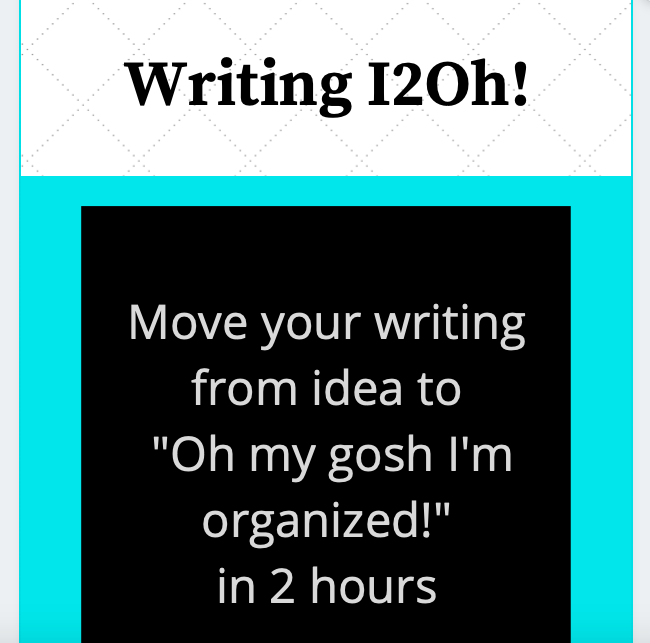
    Writing I2Oh!

    (It’s pronounced Writing Eye Two Oh! – It loses something in a sans serif font – I’ll make sure to work on that for my next course title.)

    What if you didn’t have to struggle to get your thoughts down coherently on paper? With Writing I2Oh!, you don’t have to struggle to get your thoughts down. You’ll learn how to turn your writing from idea to “Oh my gosh, I’m organized!” in as little as two hours.

    Since LELA House is a virtual home for people who imagine education differently, I think of Writing I2Oh! as a supplement to secondary ELA education, as well as a way for writers of all kinds to get a handle on their ideas. Writing I2Oh! can work for bloggers, advanced students, and academic writers, too.

    In Writing I2Oh! I demonstrate the process I go through to get an idea out of my head and onto paper, which is also the process I’ve used with hundreds of students over the years. If you or someone you know struggles to move from idea to organized, please check out Writing I2Oh!

  • What’s Your Story?

    What’s Your Story?

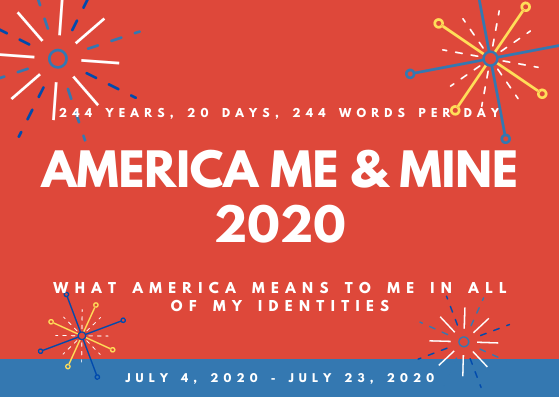
    I created a writing challenge for myself – America Me & Mine – to write 20 244-word blog posts about what America means to me. If you’d like to learn more about it and even join me, you can get more information here. I’d love to have you join me!

    Today’s post was about storytelling. We all have stories to tell. Goodness, that’s part of what LELA House is about – helping people understand and be understood – and storytelling is a great way to do just that.

    And I’m here to help people tell their stories. I think that is ultimately why I enjoy helping people write and why I’m venturing into course creation – because I get to help people share their stories with the world.

    What is your story, and how can I help you tell it?

  • Something Old, Something New

    Something Old, Something New

    The online journal I use sends me daily flashbacks of journal entries. The following is my entry from July 4, 2016.

    I mean, what do I want really?  Really?  I want to follow God wherever He leads me.  I want to bridge high school and college.  I want to help people learn to become better writers (although, really, I’m not sure why I care about that so much, but I do).  I think it’s because in the process of becoming better writers, we become better people who learn to get in touch with who we are and who we are in community.  By learning to express ourselves better in writing, we learn to think better and dream better and love better, and explore better, and live better.  In learning to write better we learn to look for purpose and meaning in the world and in ourselves.  Writing is a gateway to exploring the fullness of our humanity and how God divinely orchestrates our roles in the world.  Learning to write better enhances our ability to be and think and do and create, to understand we have purpose and to fulfill it.  Writing is living at its fullest, and being able to help people live is a worthy endeavor, indeed.

    I still find helping people write a worthy endeavor.

    I also still want to bridge high school and college, too.

    Actually, I want to bridge all kinds of levels of education and help people, whether they are in or are out of school, keep on reading, writing, creating and learning.

    To that end, I’m working on something new to offer you through LELA House. I’m dipping my toes into course creation.

    I’ll keep you posted on what’s coming up. In the mean time, if there’s a course you’d like to see, please comment and let me know what’s interesting for you. And please, keep on living, reading, growing, writing, exploring, loving, dreaming, and becoming who God created you to be.