
Join me for a 90-minute co-working session!
Tag: book coach
-

Three Ways to Work with Dr. Roshaunda
Hi y’all,
I’ve got big news!
I am an Author Accelerator certified book coach!
So what does that mean? Let me tell you.
Author Accelerator is a year-long (approximately) course that trains people to become book coaches. Per the Author Accelerator website, a book coach is an editor, a mentor, and a cheerleader; a sounding board for creative ideas; a committed partner; an independent expert; an entrepreneur; a human.
That last one–human–is very important in today’s world of AI. I’m not an AI detractor. I think it can be a great tool, but AI cannot write or read like humans do. AI cannot respond to a writer or their manuscript with expertise and compassion, with creativity and insight, with grace and accountability, with passion and love.
And that’s what I do as a book coach: respond to you and your writing with expertise, compassion, creativity, insight, grace, accountability, passion, and love.
So how is that different from what I’ve been doing? Let me tell you.
It’s not so much different from what I’ve been doing as a coach for Black women in higher education as it is a beautiful expansion of the coaching I do for Black women in higher education.
To my decades of experience in supporting academic writers, I’m adding dozens of practicum hours in fiction coaching: including how to move from idea to outline, from outline to draft, from daft to manuscript, and from manuscript to pitch package. And friends, these lessons do not only apply to fiction; they apply to academic writing as well.
Not only can I now support you in your fiction writing, I can also help you bring the possibilities inherent in fiction into your academic writing. You want to work on the narrative arc of your nonfiction? I’ve got you. You want to narrate your nonfiction through the lens of a protagonist? I’ve got you.You want to frame your nonfiction in such a way that one scene causes the next? I’ve got you.
My new certification as a fiction book coach enhances my ability to support Black women in higher education in all the ways. In other words, I’ve got you.
So, my beautiful Black sistahs in higher education, there are three ways to work with me: SDJ, Dissertation Deliverance, and Strategic Semester. And you don’t have to choose just one. I recommend SDJ for everyone and then add Dissertation Deliverance or Strategic Semester, depending on what kind of writing you’re doing. Of the three options, choose one or two to best support your current needs and your future aspirations.
SDJ (Sistahs on the Doctoral Journey) is a community of Black women in academia (from ABD through senior leaders), who support, celebrate, encourage, connect, and build together.
Dissertation Deliverance: Weekly Accountability Coaching is private, personalized 1:1 coaching to help you navigate your doctoral journey once you’ve completed your coursework. You may be doing self-directed work, but you don’t have to work in a silo.
Strategic Semester: From Idea to First 100 Pages in 16 Weeks is a 16-week cohort for Black women in higher education. You will go from being unsure of how to start your book project (fiction or nonfiction) and struggling to create a writing habit to having dedicated writing time, a blueprint for your book, and your first 100 pages.
So what should you do right now, now that you know all of these wonderful things about my business and book and writing coaching?
- Hug a human who means a lot to you, being grateful you get to exist in a world of beauty, writing, and humanity.
- Sign up for at least one of the following: SDJ, Dissertation Deliverance, and Strategic Semester
- On the off-chance you don’t sign up for any of my services, share this post with your network. You can repost on your various platforms; send the link to a friend, family member, or colleague; or even become a financial sponsor for someone you know who needs my services.
Happy writing, and may God bless you on your journey!
-
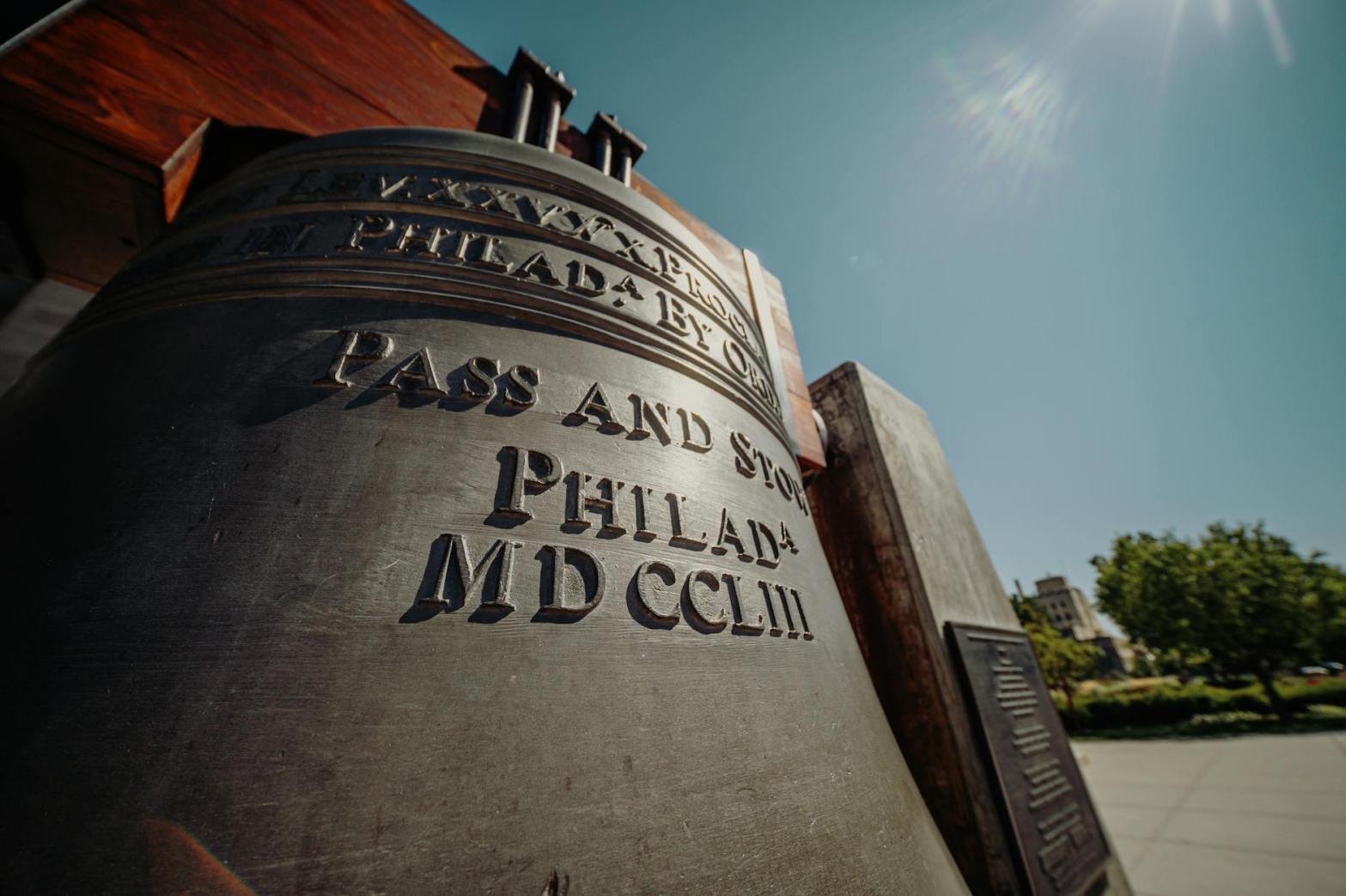
My Philadelphia Era & My Book and Writing Coaching Era
I believe I have entered my Philadelphia era in my reading. As you know, I have a love-hold relationship with Libby. I put books on hold, and they are all invariably delivered to me when I cannot read them (usually because I’m already reading several books when several more get delivered to me). So I postpone delivery of the books, and the vicious cycle continues.
I recently finished reading Unexpected Diva by Tiffany L. Warren (after several rounds of Libby holds and deliveries), and I’m currently reading The Grimkes by Kerri K. Greenidge, along with several other titles as well, but these are my Philadelphia titles. And previously I was reading All We Were Promised by Ashton Lattimore. I started Unexpected Diva several months ago and was in an unhealthy relationship with it via Libby. The main character feels like we would be friends in real life. I’m on my first round of reading The Grimkes. It will go back into the infernal hold loop soon, but I’m enjoying that book as well. The various races of members of the Grimke family have always fascinated me, and this book is taking me on a deep dive into how they navigated having family on opposing sides of racial lines. Both books have a lot of action in Philadelphia, and I feel like the people in them surely would have crossed paths.
Unexpected Diva is a biographical novel, and The Grimkes feels just shy of being narrative nonfiction. I love how both books blur the line between fiction and nonfiction. The authors are adept storytellers.
I started All We Were Promised a while ago, and it got swept back into the depths of Libby. Like other books, I allowed it to wallow in Lake Libby, likely never to return. Now that I’m in my Philadelphia era, however, it has come back to mind, since it takes place in Philadelphia. I want to read it alongside these other Philadelphia adjacent books; and thus, I have reentered into the Libby hold cycle.
Also interesting to me is that the action of these three books coincides with the 1850 Fugitive Slave Act. I’m discovering I’m endlessly fascinated by the 1850 Fugitive Slave Act. I studied that law while writing my dissertation. In my dissertation, I looked at four novels written during the 19th Century that had action taking place circa 1850. I examined Uncle Tom’s Cabin, by Harriet Beecher Stowe; Clotel, by William Wells Brown; Bondwoman’s Narrative, by Hannah Crafts; and Pudd’nhead Wilson, by Mark Twain. I explored how enslaved women manipulated race and gender to find freedom for themselves and their children, with the burgeoning Women’s Rights Movement and the 1850 Fugitive Slave Act as backdrops. When I studied the 1850 Fugitive Slave Act while writing my dissertation, I did not know I would still be intrigued by it 16 years later.
My Philadelphia era also brings to mind Midnight by Beverly Jenkins, which takes place in Boston. While Boston is not Philadelphia, like Philadelphia, it is a site where US freedom was contested during the early years of the United States. Also unlike the three books mentioned above, Midnight takes place during the US War for Independence. But, like the aforementioned books, Midnight highlights the tenacity and spirit of African American women in the US during the long 19th Century by offering glimpses into the lives and hearts of these women and telling their narratives as primary to the foundations of the US, not ancillary.
I love a good book with action set in the US during the long 19th Century (which spans approximately 1775-1920), especially if it considers the lives of African Americans generally, African American women specifically, and the multilayered system of enslavement that pervaded every facet of life in the US. I recognize that may sound super niche, but I find I always have books to read on those topics, both fiction and nonfiction. Some are novels; some are academic; some fall in the space in between. Some are Westerns; some are romance; some are biographical. Other books I’ve read recently include James, by Percival Everett; Hester, by Laurie Lico Albanese; They Were Her Property, by Stephanie Jones-Rogers; and Abolitionist’s Daughter, by Diane C. McPhail.
I love books written during the long 19th Century, and I love books written about the long 19th Century. I read all kinds of books written during a variety of time periods, but I always have at least a couple of 19th Century books in my reading pile at any given time.
Because I love that time period so much, I’m a writing coach for people who set their writing during the long 19th Century. And if you write about the lives of African Americans generally, African American women specifically, and the multilayered system of enslavement that pervaded every facet of life in the US, then I want to work with you! I coach both fiction and nonfiction writers, and I have worked for years with nonfiction and academic writers, but today I’m specifically looking for fiction writers.
I’m in a book coaching certification course through Author Accelerator to learn more about the process of bringing a work of fiction to life from conception to publication. As part of the course, I get to work with three practicum clients as part of my training. Practicum clients will cover the life cycle of writing fiction.
The first practicum client should be early in the writing process. If you have an idea and would like support in fleshing it out and moving it forward, then I would like to work with you. You would complete a manuscript blueprint and have a Zoom call with me to discuss how to write forward.
The second practicum client should have a completed or nearly completed manuscript. If you are at this stage in your writing, I would love to work with you. In our work together, I would review your manuscript, write an editorial letter, and hold a Zoom call with you to discuss revision strategies.
The third practicum client should be ready to query a publisher. If you are at this stage of your writing, I would love to work with you on a query letter.
If you’re interested in working with me as a practicum client, please message me! I would love to talk with you about your work and how I can support you.
And if you made it this far, you’re likely interested in US literature set during the long 19th Century, you’re in a locale-specific reading era, or you are wallowing in Lake Libby. No matter what prompted you to the finish, you are my people! What have you been reading and writing lately? Let’s chat.