Tag: Writing

  • Three Ways to Work with Dr. Roshaunda

    Three Ways to Work with Dr. Roshaunda

    Hi y’all,

    I’ve got big news!

    I am an Author Accelerator certified book coach!

    So what does that mean? Let me tell you.

    Author Accelerator is a year-long (approximately) course that trains people to become book coaches. Per the Author Accelerator website, a book coach is an editor, a mentor, and a cheerleader; a sounding board for creative ideas; a committed partner; an independent expert; an entrepreneur; a human.

    That last one–human–is very important in today’s world of AI. I’m not an AI detractor. I think it can be a great tool, but AI cannot write or read like humans do. AI cannot respond to a writer or their manuscript with expertise and compassion, with creativity and insight, with grace and accountability, with passion and love.

    And that’s what I do as a book coach: respond to you and your writing with expertise, compassion, creativity, insight, grace, accountability, passion, and love.

    So how is that different from what I’ve been doing? Let me tell you.

    It’s not so much different from what I’ve been doing as a coach for Black women in higher education as it is a beautiful expansion of the coaching I do for Black women in higher education.

    To my decades of experience in supporting academic writers, I’m adding dozens of practicum hours in fiction coaching: including how to move from idea to outline, from outline to draft, from daft to manuscript, and from manuscript to pitch package. And friends, these lessons do not only apply to fiction; they apply to academic writing as well.

    Not only can I now support you in your fiction writing, I can also help you bring the possibilities inherent in fiction into your academic writing. You want to work on the narrative arc of your nonfiction? I’ve got you. You want to narrate your nonfiction through the lens of a protagonist? I’ve got you.You want to frame your nonfiction in such a way that one scene causes the next? I’ve got you.

    My new certification as a fiction book coach enhances my ability to support Black women in higher education in all the ways. In other words, I’ve got you.

    So, my beautiful Black sistahs in higher education, there are three ways to work with me: SDJ, Dissertation Deliverance, and Strategic Semester. And you don’t have to choose just one. I recommend SDJ for everyone and then add Dissertation Deliverance or Strategic Semester, depending on what kind of writing you’re doing. Of the three options, choose one or two to best support your current needs and your future aspirations.

    SDJ (Sistahs on the Doctoral Journey) is a community of Black women in academia (from ABD through senior leaders), who support, celebrate, encourage, connect, and build together.

    Dissertation Deliverance: Weekly Accountability Coaching is private, personalized 1:1 coaching to help you navigate your doctoral journey once you’ve completed your coursework. You may be doing self-directed work, but you don’t have to work in a silo.

    Strategic Semester: From Idea to First 100 Pages in 16 Weeks is a 16-week cohort for Black women in higher education. You will go from being unsure of how to start your book project (fiction or nonfiction) and struggling to create a writing habit to having dedicated writing time, a blueprint for your book, and your first 100 pages.

    So what should you do right now, now that you know all of these wonderful things about my business and book and writing coaching?

    • Hug a human who means a lot to you, being grateful you get to exist in a world of beauty, writing, and humanity.
    • Sign up for at least one of the following: SDJ, Dissertation Deliverance, and Strategic Semester
    • On the off-chance you don’t sign up for any of my services, share this post with your network. You can repost on your various platforms; send the link to a friend, family member, or colleague; or even become a financial sponsor for someone you know who needs my services.

    Happy writing, and may God bless you on your journey!

  • I Made the Mistakes on My Doctoral Journey So You Don’t Have To

    I Made the Mistakes on My Doctoral Journey So You Don’t Have To

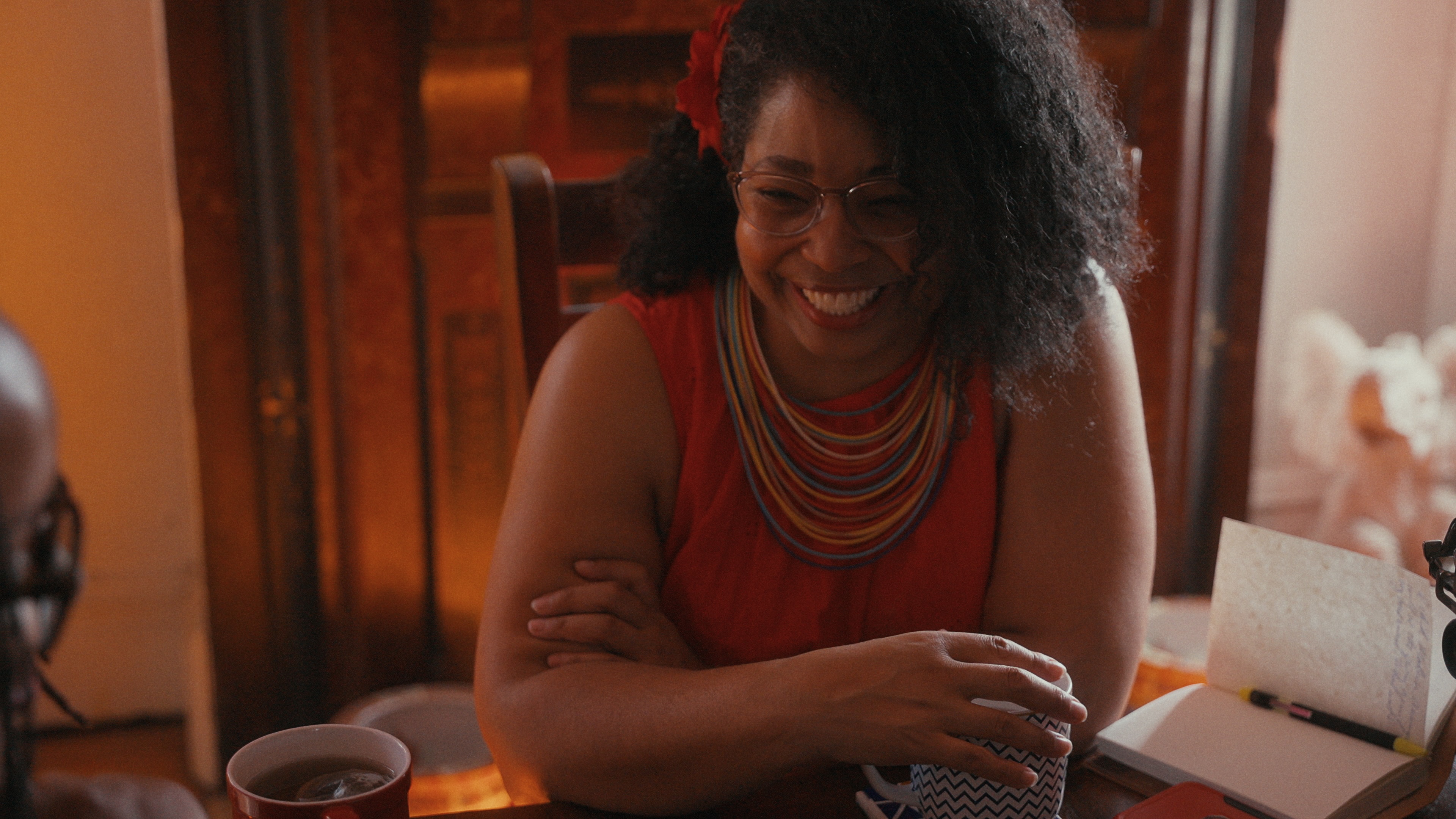
    Videography by John Lore of John Lore Photo & Video

    I earned my Ph.D. nine years after I started my coursework. I had many pitfalls and drama. Some of the drama was of my own creation, and most of it was avoidable. My journey took much longer than I anticipated and way longer than I wanted.

    I learned a lot from my experience, though. One of the most important lessons was that, by and large, academia and doctoral programs are not built for Black women. I didn’t see much representation of other women who looked like me, and I felt very alone, despite having a professor in a different department who eventually became a member of my committee. She really helped see me through, but because of the systemic differential in our power dynamic, I didn’t feel comfortable sharing my full self with her.

    I needed someone who operated outside of the academic system who also had firsthand knowledge of the system. I needed someone outside of my institution who could see things differently than I did. I needed someone who had been in my position and understood the journey. I needed someone who could help me get and stay on track and hold me accountable to my goals. I needed a partner who I could trust with myself and my work. In short, I needed a coach.

    So I became what I needed, and now I do this work for Black women in doctoral programs.

    If this resonates, post “I hear you!” in the comments.

    And for a sneak peak into the transformational work I do with clients, check out 10 Strategies for Navigating Your Doctoral Journey + Coaching Workbook.

  • Duolingo to Doctoral Journey

    Duolingo to Doctoral Journey

    My aunt and I were discussing our Duolingo progress the other day. She is studying Spanish, and I’m studying German, and neither of us is anywhere near fluency, despite impressively long daily streaks.

    I like Duolingo for what it is. It’s a fun social app that challenges me to learn a new language. I’m not expecting to gain fluency from it. I’m expecting to learn a little German. To gain fluency, I would need to spend time working on German with other people, especially people fluent in German.

    And if I had my druthers, I’d sit and talk with Dr. Georgiana Rose Simpson, the first Black woman to earn a Ph.D. in the US. She earned her doctorate in German in 1921 from the University of Chicago, at the age of 55. Fifty-five! She is proof you are not too old to follow your dreams. I won’t dive into her fascinating story today, but I encourage you to check it out here.

    What I will dive into is contemplating how difficult it had to have been for Dr. Simpson. Earning a doctorate is difficult under the best of circumstances. Earning one during the Jim Crow era had to have been unspeakably challenging. Yet she persevered.

    I wonder who supported her on her doctoral journey. I wonder what strategies she used. I wonder who she cried with when the road seemed impossible. I wonder what wellsprings of strength existed inside of her.

    And I wonder what it was like for her to be one of the first Black women on this doctoral journey. Two other Black women also earned Ph.D.’s in 1921–Dr. Sadie T. M. Alexander (the first National President of Delta Sigma Theta Sorority, Inc.) in Economics from the University of Pennsylvania and Dr. Eva B. Dykes (another member of Delta Sigma Theta Sorority, Inc.) in English from Radcliffe College. All three women graduated in June 1921, within days of each other

    I know what my doctoral journey was like. I felt alone and in the dark about many things. I earned my Ph.D. in English in 2009, 88 years after the first trio of Black women to do so, but I wonder if they felt much like I did. I wonder if they had anyone to talk to who really understood what they were going through. I think we too often travel this journey alone when we don’t have to.

    So if you are a Sistah on the Doctoral Journey, please know that you don’t have to travel alone. I’m here to support you and bear witness to all that this journey is for you.

    And I’m here to offer a little help. I’ve been helping people on their doctoral journeys for years, and I’ve created a workbook of strategies and coaching questions to help you navigate your own journey.

    Please click to purchase 10 Strategies for Navigating Your Doctoral Journey + Coaching Workbook. And leave a comment to share how the stories of these Black doctoral pioneers resonate with you.

    Onward.

  • Let’s Have an Intentional Finish to the Year

    Let’s Have an Intentional Finish to the Year

    Hi, y’all,

    How are you? Like, really – how are you?

    I’m doing well. I’m experiencing my annual shock that it’s almost the end of the year. Years go by so much faster than they used to. One day it’s mid-October, and I’m enjoying watching the leaves turn, and next thing I know, it’s New Year’s Eve.

    If the year is flying by for you (along with all those writing deadlines you’ve set, ahem), then we are in the same boat.

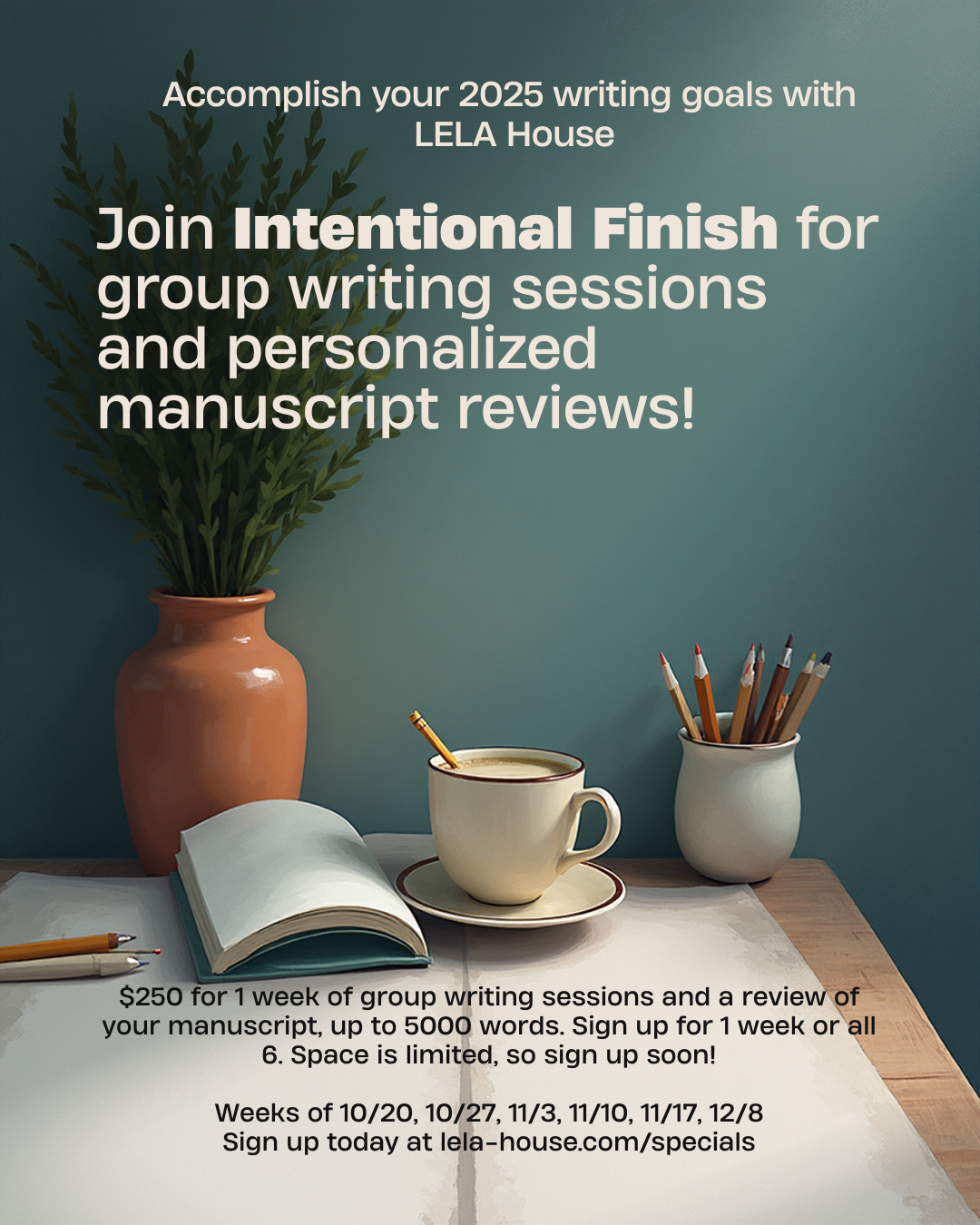
    I’ve invited myself to have an Intentional Finish and wrap up my writing for 2025. I’m dedicating 4.5 hours per week, over the course of 6 weeks between now (mid-October) and early December, to focus on my writing and flesh out some of the ideas I’ve been working on. And I’m inviting you to join me.

    What I’m not doing is stressing myself out or berating myself for all the things I haven’t done. I’m also not pretending like I’m going to do a lot of writing over the holidays. I’ve seen how that has worked out for me, and I’m trying something different.

    So instead, I’m focusing on what I can do to move forward in my writing in a way that works for me. In other words, I am plotting an Intentional Finish to my writing for 2025.

    In brief, Intentional Finish is 1 week of writing together (Monday, Wednesday, and Friday), then getting a professional review of what you have written, up to 5000 words – all for $250.

    You can learn more and sign up for Intentional Finish by clicking the link.

    If you’re like me, you were going to get yourself a little something for the holidays (maybe a few little somethings). Why not gift yourself forward progress on your writing? As they say, investing in yourself is the best investment.

    Click to sign up today to create your own Intentional Finish.

    And if you know anyone who may be interested in their own Intentional Finish, please pass this along to them.

    Until next time!

  • Tell Your Story Now

    Tell Your Story Now

    I don’t believe anyone should spew hate. We should not hold hate in our hearts, and we should not act on any hate we find within ourselves. But I do believe in the US we have the right to speak hateful things. Yes, limits exist to free speech, but simply saying something a group of people don’t like doesn’t negate a person’s right to speak those things freely. Additionally, what we say and what we believe in our hearts affect the people around us. Hate doesn’t exist in a vacuum. I am deeply disturbed by recent developments regarding our penchant for spewing hate in the US.

    First, the US was built on spewing hate. Hate is built into our foundation. Chattel slavery. Atrocities against Indigenous peoples. Rampant misogyny. I could indefinitely list instances of hate permeating the US, because the incidences of such are endless. This endless march of hatred has shaped the US, and we shouldn’t pretend that it has not. Removing images and teachings of this hate doesn’t erase it. Instead of helping us remember our sordid history and learn from it, removing uncomfortable truths from the public sphere helps us to pretend like our past didn’t happen, enables us to repeat it, and facilitates a return to a society where only wealthy White men enjoy the full rights and safeguards of US citizenship.

    Secondly, no one should die because they have said something someone doesn’t like. And no one should lose their jobs for this reason. And television shows should not be canceled for this reason. What I’m watching happen is that it’s ok for some people to exercise their right to free speech but not for others. Recent assaults on the First Amendment are disturbing, and more importantly, they are dangerous. They are leading us ever closer to an Orwellian future where “All animals are equal, but some animals are more equal than others.”

    So if you have a story to tell that promotes a history that will likely be erased, tell it now. If you have a study that safeguards the lives of people whose lives seem to matter less and less, write and publish it now.

    Now is the only time in which you can do anything, and, friends, the world needs to hear from you now. That novel that’s been burning in your soul? Bring it into the world now. That idea that keeps you up at night? Bring it into the world now. That research you have pored over? Bring it into the world now.

    Take the next step and get some support for your writing endeavors. I’m here to help with Book & Writing Coaching and Life & Accountability Coaching. Click to book some time with me. And if we work together or not, please bring your art into the world now. We need it. I’m rooting for you. And for all of us.

  • Cultural Custodian

    Cultural Custodian

    Hello!

    How are you? I pray you’re well.

    I’m doing fine and dandy, thank you very much.

    Last time I wrote, I mentioned I’ve come to consider myself a cultural custodian for black women, and I promised I’d elaborate on that idea.

    Lately I’ve pondered a lot about my career, and what I love to do, and what I love to read, and who I like to serve, and so many things pointed to black women. I’m a black woman, and I love that. I love my skin and my hair and my culture. I’ve even learned to love things like having to work harder for half as much and consistently being underestimated when I walk into a room. I don’t love that those things are reality; rather, I love that through them I’ve learned strength and compassion.

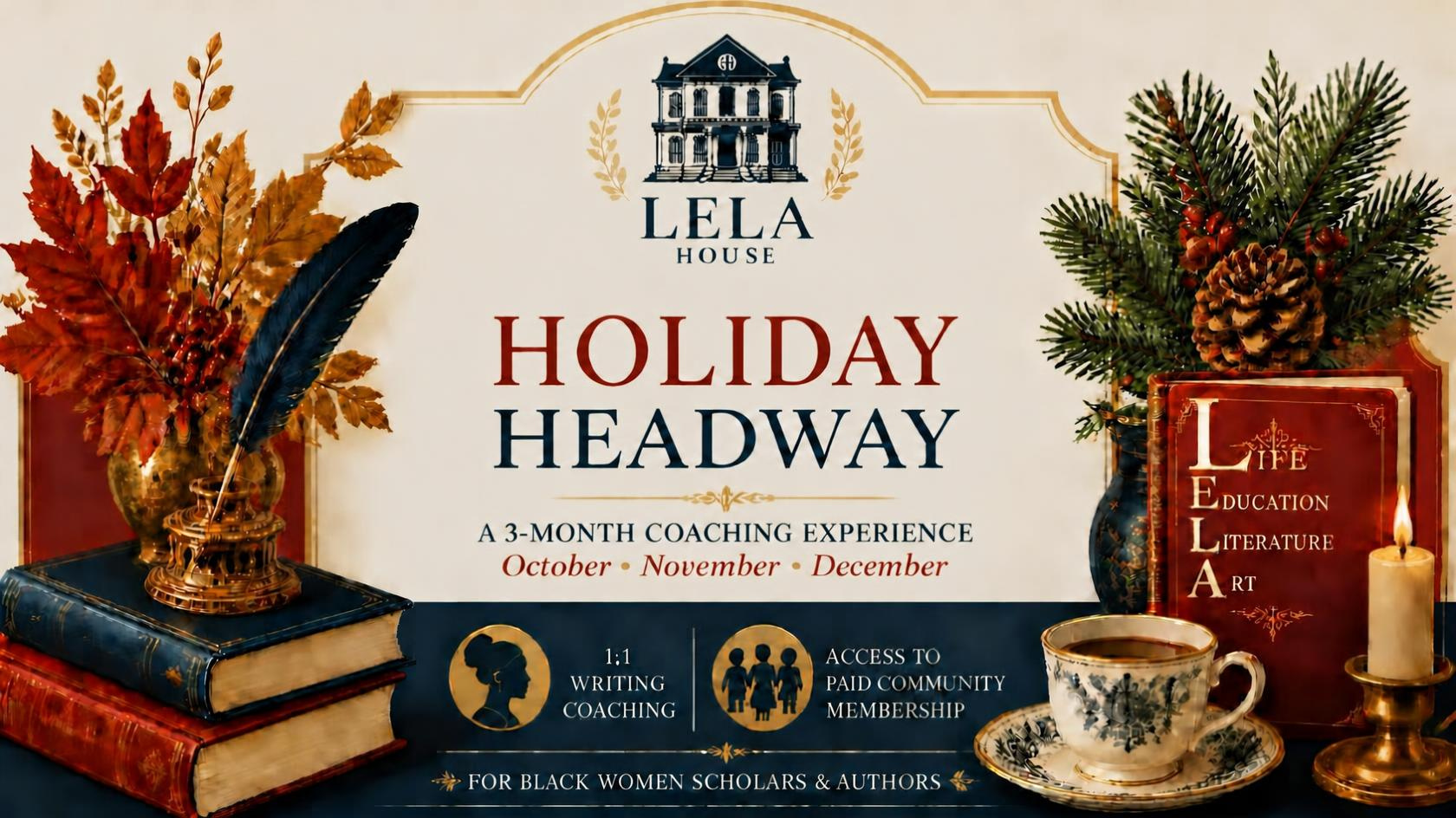
    I seek out and surround myself with black women. I read books by and about black women, particularly historical black women. I care about what concerns us. And through LELA House, I find my work connects to protecting our hearts, expanding our joy, and highlighting our voices.

    All of this led me to consider myself a cultural custodian of black women. Obviously I looked up many definitions and connotations of cultural, custodian, and cultural custodian. Who would I be if I didn’t look up definitions? 🙂

    Many definitions included the ideas of preserving, maintaining, safeguarding, and promoting the traditions, practices, values, and narratives of a culture. I find all of those ideas valuable and accurate as they relate to my work at LELA House. Through book coaching, writing coaching, and self-care services, I do, indeed, strive to preserve, maintain, safeguard, and promote the traditions, practices, values, and narratives of black women. One definition of cultural custodian, from “The Custodian: Introduction: The Custodian and the Significance of Art Preservation” in the November 13, 2023 issue of Selections Magazine, added some nuance that particularly struck a chord with me.

    “In the world of art, the custodian plays a pivotal role in the protection, curation, and promotion of artworks and collections. Whether an individual or an institution, custodians shoulder the responsibility of ensuring that these artistic expressions remain intact for future generations. Their role extends beyond mere preservation; it encompasses a commitment to making art accessible, fostering an understanding of its historical and cultural context, and supporting the broader appreciation of artistic endeavors.”

    Resonating the most with me is the idea of black women ourselves, not solely the creative works we produce, as art. My take on the quotation becomes the following.

    In the world of black women as masterpieces, the custodian plays a pivotal role in the protection, curation, and promotion of individual black women and us as a collective. Whether an individual or an institution, custodians shoulder the responsibility of ensuring that black women’s narratives remain intact for future generations. Their role extends beyond mere preservation; it encompasses a commitment to making black women’s stories accessible, fostering an understanding of their historical and cultural context, and supporting the broader appreciation of black women, our experiences, and our creative expression.

    And yes, that is work I want to do.

    Why do I care so much about our stories from the long US 19th Century and supporting those who tell them? Because mere preservation isn’t enough; our stories must be accessible to foster an understanding of our historical and cultural context. Why do I care about our stories from other historical eras and supporting those who share them? Because our narratives must remain intact for future generations. Why do I care about our joy and well-being and supporting black women as we incorporate these things into our lives? Because we must support the broader appreciation of black women, our experiences, and our creative expression. Why do I consider myself a cultural custodian for black women? Because we are masterpieces who must be protected and promoted as individuals and as a collective, and God created me to serve in that role.

    God has been leading me to work as a cultural custodian for black women for my entire life. From my high school acts of civil disobedience to pledging my sorority to adventuring with my mother, to being outraged at discrimination in a library, I’ve spent 30+ years serving as a cultural custodian for black women without knowing that was what I was doing.

    But I know now. Let’s see where God will take me.

    Until next time!