
I just learned the White House fired most of the members of the National Council on the Humanities. I wrote about it here. Please check it out.
Category: community transformation
-
My Philadelphia Era & My Book and Writing Coaching Era
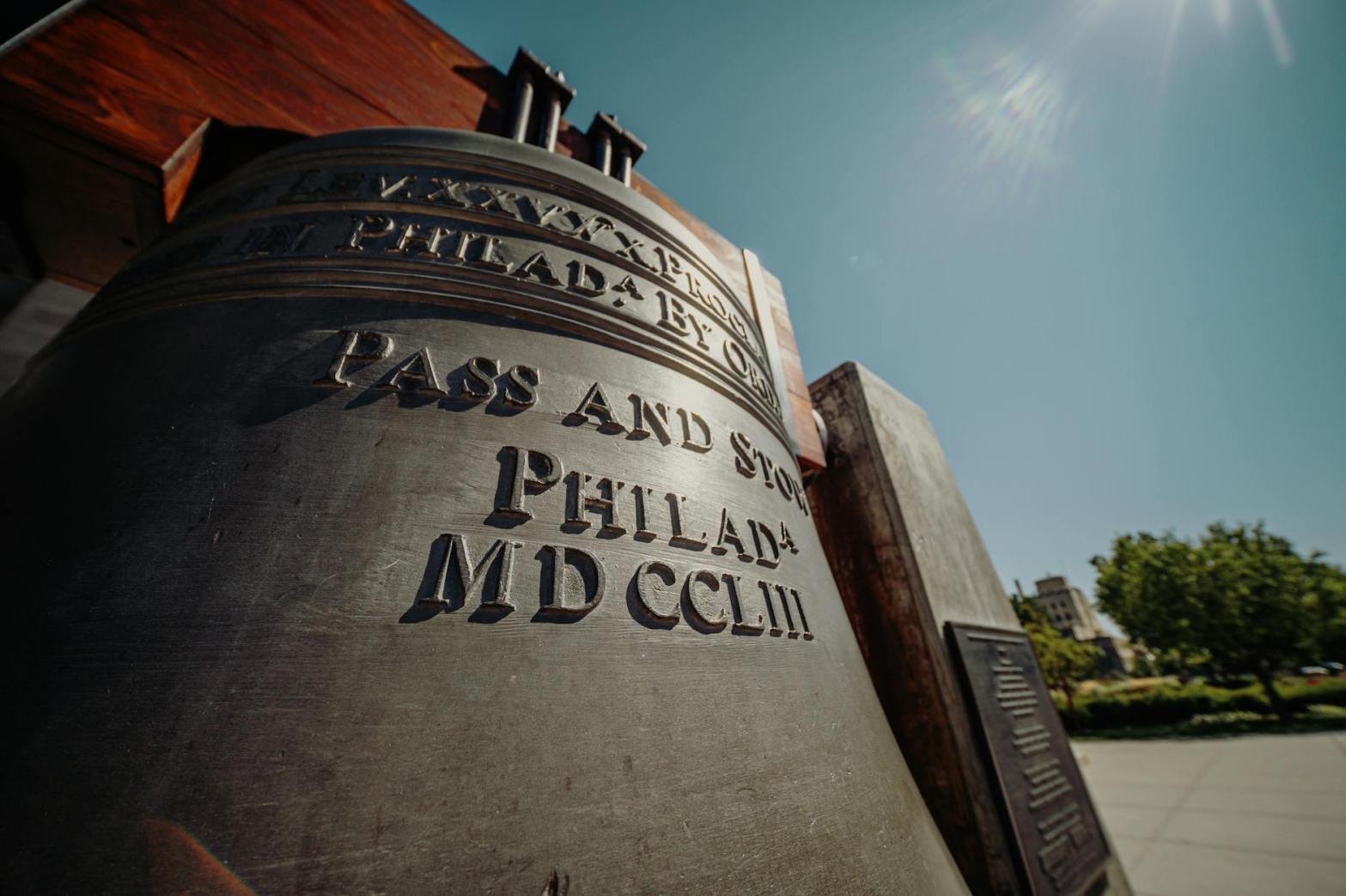
I believe I have entered my Philadelphia era in my reading. As you know, I have a love-hold relationship with Libby. I put books on hold, and they are all invariably delivered to me when I cannot read them (usually because I’m already reading several books when several more get delivered to me). So I postpone delivery of the books, and the vicious cycle continues.
I recently finished reading Unexpected Diva by Tiffany L. Warren (after several rounds of Libby holds and deliveries), and I’m currently reading The Grimkes by Kerri K. Greenidge, along with several other titles as well, but these are my Philadelphia titles. And previously I was reading All We Were Promised by Ashton Lattimore. I started Unexpected Diva several months ago and was in an unhealthy relationship with it via Libby. The main character feels like we would be friends in real life. I’m on my first round of reading The Grimkes. It will go back into the infernal hold loop soon, but I’m enjoying that book as well. The various races of members of the Grimke family have always fascinated me, and this book is taking me on a deep dive into how they navigated having family on opposing sides of racial lines. Both books have a lot of action in Philadelphia, and I feel like the people in them surely would have crossed paths.
Unexpected Diva is a biographical novel, and The Grimkes feels just shy of being narrative nonfiction. I love how both books blur the line between fiction and nonfiction. The authors are adept storytellers.
I started All We Were Promised a while ago, and it got swept back into the depths of Libby. Like other books, I allowed it to wallow in Lake Libby, likely never to return. Now that I’m in my Philadelphia era, however, it has come back to mind, since it takes place in Philadelphia. I want to read it alongside these other Philadelphia adjacent books; and thus, I have reentered into the Libby hold cycle.
Also interesting to me is that the action of these three books coincides with the 1850 Fugitive Slave Act. I’m discovering I’m endlessly fascinated by the 1850 Fugitive Slave Act. I studied that law while writing my dissertation. In my dissertation, I looked at four novels written during the 19th Century that had action taking place circa 1850. I examined Uncle Tom’s Cabin, by Harriet Beecher Stowe; Clotel, by William Wells Brown; Bondwoman’s Narrative, by Hannah Crafts; and Pudd’nhead Wilson, by Mark Twain. I explored how enslaved women manipulated race and gender to find freedom for themselves and their children, with the burgeoning Women’s Rights Movement and the 1850 Fugitive Slave Act as backdrops. When I studied the 1850 Fugitive Slave Act while writing my dissertation, I did not know I would still be intrigued by it 16 years later.
My Philadelphia era also brings to mind Midnight by Beverly Jenkins, which takes place in Boston. While Boston is not Philadelphia, like Philadelphia, it is a site where US freedom was contested during the early years of the United States. Also unlike the three books mentioned above, Midnight takes place during the US War for Independence. But, like the aforementioned books, Midnight highlights the tenacity and spirit of African American women in the US during the long 19th Century by offering glimpses into the lives and hearts of these women and telling their narratives as primary to the foundations of the US, not ancillary.
I love a good book with action set in the US during the long 19th Century (which spans approximately 1775-1920), especially if it considers the lives of African Americans generally, African American women specifically, and the multilayered system of enslavement that pervaded every facet of life in the US. I recognize that may sound super niche, but I find I always have books to read on those topics, both fiction and nonfiction. Some are novels; some are academic; some fall in the space in between. Some are Westerns; some are romance; some are biographical. Other books I’ve read recently include James, by Percival Everett; Hester, by Laurie Lico Albanese; They Were Her Property, by Stephanie Jones-Rogers; and Abolitionist’s Daughter, by Diane C. McPhail.
I love books written during the long 19th Century, and I love books written about the long 19th Century. I read all kinds of books written during a variety of time periods, but I always have at least a couple of 19th Century books in my reading pile at any given time.
Because I love that time period so much, I’m a writing coach for people who set their writing during the long 19th Century. And if you write about the lives of African Americans generally, African American women specifically, and the multilayered system of enslavement that pervaded every facet of life in the US, then I want to work with you! I coach both fiction and nonfiction writers, and I have worked for years with nonfiction and academic writers, but today I’m specifically looking for fiction writers.
I’m in a book coaching certification course through Author Accelerator to learn more about the process of bringing a work of fiction to life from conception to publication. As part of the course, I get to work with three practicum clients as part of my training. Practicum clients will cover the life cycle of writing fiction.
The first practicum client should be early in the writing process. If you have an idea and would like support in fleshing it out and moving it forward, then I would like to work with you. You would complete a manuscript blueprint and have a Zoom call with me to discuss how to write forward.
The second practicum client should have a completed or nearly completed manuscript. If you are at this stage in your writing, I would love to work with you. In our work together, I would review your manuscript, write an editorial letter, and hold a Zoom call with you to discuss revision strategies.
The third practicum client should be ready to query a publisher. If you are at this stage of your writing, I would love to work with you on a query letter.
If you’re interested in working with me as a practicum client, please message me! I would love to talk with you about your work and how I can support you.
And if you made it this far, you’re likely interested in US literature set during the long 19th Century, you’re in a locale-specific reading era, or you are wallowing in Lake Libby. No matter what prompted you to the finish, you are my people! What have you been reading and writing lately? Let’s chat.
-

Hope
Hello and how are you!?
I pray you’re well.
I’m doing well, myself.
I live in St. Louis, MO, and we just got hit by a tornado the other day. God spared my family and our home, and I praise Him for it! But so many homes and buildings were destroyed, and several people lost their lives. I knew one of those people. We were in praise dance ministry together at church. Because of her, and because of how hard our church building was hit by the tornado, and because of the many people I know who have been displaced and just don’t know how to move forward, and because of how my city is reeling, I am experiencing a mixed bag of emotions.
Yet I have hope. I have hope because God is still God.
I see God in so many ways during this time. In the people who are helping neighbors and strangers remove downed trees and debris. In the people who are giving away food and blankets. In the outcry against the unequal media coverage and distribution of resources. In the smiles. And even in the tears.
I also see God in my writing. I didn’t sit down to write about the recent tornado. I sat down to write about how working through my book coaching course has prompted me to read more and to write more. But God had other plans.
So here I am contemplating how God shows up in the midst of adversity, and writing about it to share with you.
I don’t have all the answers (or even any of them), but I know God does. And He’s not bothered by the questions and grief that weary your body, mind, and soul. To you, He offers rest. Matthew 11:28 (NLT) reads, “Then Jesus said, ‘Come to me, all of you who are weary and carry heavy burdens, and I will give you rest.’”
Rest is a gift from God, and we all need it. Whether or not we are in the midst of adversity, God wants us to rest. To relax in the knowledge that He is all sufficient and will supply all of our needs. That doesn’t mean you don’t need to work. Of course you do, It means you also get to rest in the midst of your labor.
I know that is a word for me, and I hope it’s a word for you, too.
-

What’s New at LELA House
Hello!
How are you?
I’m doing well. Really well, actually. That’s part of why it’s been a while since we’ve talked, so I wanted to update you on my recent career moves.
As you know, I’ve spent years working with academic writers, and I have been coaching academic writers through my business LELA House for about 5 years now. I plan to continue coaching academic writers, but I am also going to transition to book coaching.
I’m currently enrolled in a book coach certification program through Author Accelerator, where I am learning to work with people on full book projects. I am a self-proclaimed cultural custodian for black women (it took me a long time to realize that my entire life trajectory has been pointing toward this, but that’s a different story for another day :-). So through LELA House, I seek to maintain, protect, and advance the culture of black women, focusing on our LELA (Life, Education, Literature, and Art). I offer writing coaching, executive life coaching, and self-care services. For the crux of my work, however, I support women whose writing includes black women and our concerns (especially, but not exclusively, from the long US 19th Century). I’m looking forward to working with writers who depict historical African American women, particularly women from the long US 19th Century. I’m excited about this shift, as it helps me dive deeper into 19th C US literature (particularly literature by and about black people), which was the focus of my doctoral studies, and more importantly, it gives me a new way to serve writers.
As I move through my book coach training, I will focus on working with writers to meet the specific requirements of my practicums. To that end, I will need to scale back my work with academic writers.
Before I scale back, however, I am offering a Summer Editing Special for academic writers. I will edit 5,000 – 10,000 words for a flat fee of $499. My goal is to help academic writers complete their writing before the end of summer. My editing will include in-line edits, comments, and citation review. If you are interested in moving forward with your own writing this summer, please fill out the interest form linked below. And please forward this message along to anyone who may be interested.
Summer Editing Special Interest Form
As I move through my book coach certification, I will still serve a limited number of academic writers as clients. I will also look for writers who would like support as they include historical African American women in their writing. If you know any writers who need either of these kinds of support, I would appreciate an introduction. And if you are interested in writing support yourself, I’d be delighted to talk with you about it.
Speaking of writing support, I’m working on two new offerings.
The first one is Leadership Legacy, which is an 8-week writing workshop for African American coaches of all kinds (life, leadership, career, book, etc.). In the workshop you will explore which African American leaders have influenced your leadership and how you would like to leave a legacy through your leadership. You will write an essay (or a poem, or a dramatic reading, or a TED-type talk, or whatever works best for you) over the course of the workshop that you can use as a blog post, post on LinkedIn, introductory video, or however your creativity blossoms. The workshop will be a great place to connect with other coaches and thought leaders, and you can use it to jump start your journey on that leadership book or memoir that you’ve been thinking about writing but never knew how to get started on.
The next one is S.O.S – Sisters Offer Solidarity. S.O.S is a 12-week solidarity circle that offers support to women working on their dissertations. We will work on cultivating the mindsets that will see you through the process, set goals, check in on progress, encourage one another, and dedicate time to writing. The solidarity circle will be a great place to connect with other writers in the throes of dissertating, and you can use it to help you reach your goal of finishing your dissertation.
Now, let’s keep each other accountable, because I’ve said I’ll do some things and I’ve asked you to do some things.
My Action Items
- Write more about what I mean by cultural custodian for black women.
- Tell you more about Leadership Legacy.
- Tell you more about S.O.S.
- Tell you more about my book coaching journey
- And we didn’t talk about this, but try not to go silent for so long.
Your Action Items
- Sign up for the Summer Editing Special
- Share this blog post with people, so they can sign up for the Summer Editing Special and learn about other ways they can move forward with their writing, too.
- Fill out the contact form if you would like to be my practicum client. I’ll tell you more about it as I know more, but if you are writing about black women in any way, we may be a great fit.
- And we didn’t talk about this, but take care of yourself more, write more, have more fun, and eat more healthy food.
I can’t wait to hear how you’re doing and learn what is new in your world. Leave a comment to let me know which of these offerings has gotten you excited and why!
Until next time!
-

The Mission Doesn’t Have to be Final
US Secretary of Education Linda McMahon plans to shutter the US Department of Education and is calling it the department’s “Final Mission.” This mission, per McMahon, will adhere to three convictions.
- Parents are the primary decision makers in their children’s education.
- Taxpayer-funded education should refocus on meaningful learning in math, reading, science, and history—not divisive DEI programs and gender ideology.
- Postsecondary education should be a path to a well-paying career aligned with workforce needs.1
I have so many thoughts.
The first is that generally, I agree. I say that with great hesitation, however, because I know how I understand the three convictions is likely not how she understands the convictions. Nor is how I would apply the three convictions how she would apply them. That is evident to me by the simple fact that, to me, applying these convictions would leave the US Department of Education not only intact, but also more robust. Enacting and maintaining these convictions for every learner in every family in the country requires great work of a large scope – the kind of scope that necessitates a US Department of Education.
1. “Parents are the primary decision makers in their children’s education.” I agree with that. Generally speaking, parents and guardians are the primary decision makers in their school-aged children’s lives. That doesn’t mean, however, that all parents and guardians are good decision makers. Nor do most parents and guardians have adequate information to make all educational decisions for their children. Hear me out. I’m not saying we should remove parents and guardians from their children’s education – not at all. Had someone tried to remove me from my children’s education, I would have unleashed an apocalyptic level of fury. What I am saying is that all parents and guardians haven’t dedicated their lives to the art and science of education, nor have they mastered the various subjects taught at school. Parents and guardians need support and help. It truly does take a village to raise a child. A community of input in educational decision making benefits our children, our communities, and our society. Parents and guardians have the final word on their children, but they don’t have the final word on all the children in their communities; nor are they the only voices that should be heard.
Parents and guardians being primary decision makers should not result in public funding for education being shuttled to private schools. It shouldn’t mean children with disabilities or from low income environments or who are unhoused or who don’t have parents or guardians or whose primary home language isn’t English no longer receive services vital to their educational access. It should not determine that only a male centric, white-washed curriculum be the version of education our children receive. Parents and guardians as primary decision makers should not embolden a return to de facto segregation.
2. “Taxpayer-funded education should refocus on meaningful learning in math, reading, science, and history—not divisive DEI programs and gender ideology.” I agree with this up to the dash. Generally speaking, education should focus on meaningful learning in important subjects, of which math, reading, science, and history are central. I’m not so sure how I feel about the word “refocus,” but other than that, the first part of the sentence is solid. If, as a society, we actually focused on “meaningful learning,” diversity, equity, and inclusion of people of various races, ethnicities, abilities, genders, languages, cultures, and on and on would be included in the lessons taught and the foundations represented. Because we ignore the historical fact that people who are not white, male, cisgender, and heterosexual have always participated in all fields, subjects, careers, and histories, we omit them in much of what we teach. Because we don’t include representation of people who don’t align with the aforementioned categories, we need DEI. The intent of DEI is not divisiveness. It becomes divisive when people’s perceptions do not align with the truths being shared.
“Meaningful learning in math, reading, science, and history” should include more than a brief mention of the same historical figures over and over. It should include more than a nod to the various months of the year earmarked for community representation. “Meaningful learning in math, reading, science, and history” should include all of the people who have made possible the math, reading, science, and history that we teach.
3. “Postsecondary education should be a path to a well-paying career aligned with workforce needs.” I agree, but postsecondary education should be so much more than merely an avenue toward employment. I definitely want everyone to be able to work in a well-paying career doing something they love and something that is meaningful to their community. I bristle a little, however, at the idea of aligning postsecondary education with “workforce needs.” I get it. We want people to be able to complete their postsecondary education and find a job that will use what they learned. But the needs of the workforce change rapidly, and in order to provide high-quality education, postsecondary institutions cannot and should not change per the whims of workforce needs.
Rather, let’s teach people how to discover their strengths, how to lean into those strengths, how to learn, how to innovate, how to create, how to research, how to make mental connections between disparate ideas, how to view themselves as part of a larger whole with rich histories to draw upon, how to care about the people around them and the planet they occupy, how to serve others, how to achieve mastery, how to think like a person in their field, and how to think divergently. When we equip learners in such a way, they will be prepared to enter careers and flexible enough to align with workforce needs. Plus they will have more empathy and connectedness to their communities, our society, and the world.
McMahon’s “Final Mission” seems positioned like the upcoming Mission: Impossible movie, Mission: Impossible – The Final Reckoning. I would like to see, instead, a move toward something more like a Star Trek movie with a “continuing mission . . . to boldly go where no one has gone before.” US education needs an overhaul, yes, but let’s do it together for the good of everyone.
- Linda McMahon. “Our Department’s Final Mission.” https://www.ed.gov/about/news/speech/secretary-mcmahon-our-departments-final-mission
↩︎
-
What are you creating?
Recently I talked a bit about living LELA (Life, Education, Literacy, and Arts).
Today I’m exploring arts.
By arts, I mean your creative endeavors. I’m always thinking of something to make and buying supplies. And then hoarding the supplies and not making things. But I’ve digressed.
Today I ministered one of the new dances I mentioned when I discussed learning. It ws both a creative endeavor and a blessed experience.
So what about you? What are you creating today?
To commit yourself to reading and/or wtiting today, like this post.
To encourage someone else to join in, share this post.
And please drop a comment to let me know what you did and how doing so changed you.
I can’t wait to hear from you! -

What are you reading and writing?
Recently I talked a bit about living LELA (Life, Education, Literacy, and Arts).
Today I’m exploring literacy.
I’m always in the middle of reading and writing something. Or more accurately, several somethings. So I’ll just focus on one thing today – reading.
I’ve been reading The Only Woman in the Room by Marie Benedict for about a month now. I’m enjoying it. It’s very interesting.
Sidebar – I stopped writing to look up a link to the book. I was having a difficult time trying to figure out how to describe the book by saying something more descriptive than “It’s about Heddy Lamar,” so I was either looking for inspiration or a link to share with you. I noticed in some sites the author was listed as Heather Terrell, not Marie Benedict, so I did some investigating.
Marie Benedict is a pen name for Heather Terrell. I had no idea, so I’m excited to learn this. I’ve previously read and enjoyed a book by Marie Benedict, which was a contributing factor in picking up this book. Now I have two author names to keep in mind as I find books to read.
And while I have learned more about the author, I still don’t have a better way to describe the novel than by saying, “It’s about Heddy Lamar.”
So what about you? What are you reading and writing today?
To commit yourself to reading and/or wtiting today, like this post.
To encourage someone else to join in, share this post.
And please drop a comment to let me know what you did and how doing so changed you.
I can’t wait to hear from you! -
What are you learning?
Yesterday I talked a bit about living LELA (Life, Education, Literacy, and Arts).
Today I’m honing in on learning.
I have a couple of dance ministry opportunities coming up, so I’m going to work on learning the dances today. I won’t have them perfected today (if ever, to be honest), but I am going to put in some time with them, and that’s what learning is all about.
What about you? What are you learning today?
To commit yourself to learning something today, like this post.
To encourage someone else to join in, share this post.
And please drop a comment to let me know what you did and how doing so changed you.
I can’t wait to hear from you! -

New Year, New LELA House
Greetings!
I promised you some new LELA House offerings for the new year, and I have a bunch to share with you.
If you’re an educator feeling burned out or looking for a way to accomplish your goals or just in need of some long overdue self-care, then LELA House is for you. Imagine who you can become by investing in yourself.
Read on to access all the information you need. To be sure to stay up-to-date with LELA House, please subscribe to receive emails from me. When you subscribe, you will receive a link to a downloadable PDF of 140 journaling prompts to jumpstart your self-care journey.
Short Version
You can learn about all of my offerings on my website. You can subscribe to my email list and receive a free PDF of journal prompts. You can even purchase services. Check it out at the link below. Feel free to stop reading here.
Long Version
I offer services to individuals and institutions. I believe each educator owes self-care to themselves, and I also believe the institutions where we serve must invest in the well-being of their educators. I’m here to help with both.
- Individual Experiences
- Breakthrough Session – This is a free 30-minute coaching session to see if LELA House is for you.
- Email Coaching – This is 30 consecutive days of email coaching. You can email me as much as you like, and I will reply up to 3x per week. We can discuss any areas of your life where you desire transformation.
- IDEA (Innovate, Dream, Energize, Activate) Coaching – This is a one-time coaching session where we meet to help you break through in one particular area where you are feeling stuck.
- Confident & Courageous Coaching – This is 3 months of biweekly coaching sessions where you discover the confidence and courage to explore limiting beliefs that hold you back from being who God created you to be and develop the mindsets and habits to make and sustain powerful change in your life.
- Self-Care Sundays – On the third Sunday of each month, educators meet to devote time to reading, writing, creating, or Christian meditation.
- Learn more about 1:1 individual experiences by clicking here.
- Learn more about Self-Care Sundays by clicking here.
- Experiences for Institutions
- Community Writing Workshops – Participants explore topics salient to your institution through writing and reflection (75 minutes).
- Values Workshops – Participants determine their values and how to activate them in daily decision-making. This workshop uses writing, reflection, and connection and can be useful to determine individual values or collective values (ie: of a department) (75 minutes).
- Powerful Question Workshops – Participants break down and respond to a question about your institution’s impact and future. Then participants support each other in plotting a course forward. This workshop uses writing, reflection, and small and large group work (90 minutes).
- Common Reading Sessions – Help your educators learn together by offering common book studies (60 minute sessions).
- Executive Coaching – Provide ongoing executive coaching to your educators (45-60 minutes per session).
- To learn more about the experiences for institutions, click to fill out the contact form.
Lastly, since I’m a writing person at my core, I’m also available to work with you on grant proposals, ongoing grant write-ups, reviewing articles for submission, and other sorts of writing contract work. If you’re interested in that, please email me, and we will set up a conversation to discuss collaboration possibilities.
Thank you for your interest in LELA House and for supporting me. It means the world to me.
Please share this post with anyone you believe would be interested in and benefit from LELA House services.
Oh! Also, if you’re interested, I’m challenging myself to write more and to publish what I write. Please check out my Patreon page at the link below. When you land there, you’ll be able to read the first chapter of a novel I’m working on that tells the story of the fall of Jericho from the perspective of Rahab. If you like what you read, please consider becoming a patron.
And for making it all the way to the end of this post, you get a bonus!
I’ve curated some of my favorite blog posts, which you can find at the link below. I hope you enjoy them!
Ok, I’m done now. 😀
Have an amazing day!
- Individual Experiences
-

Wishful Thinking
You know what I wish more people knew?
That higher education professionals (those of us who work in colleges and universities) love our students.
That we don’t just sit around in ivory towers isolating ourselves.
That we pour out ourselves for our students. We stay late to help students. We lose sleep over best ways to help students. We go broke buying snacks, groceries, and hygiene products for our students who don’t have income. We research shelters for our students who don’t have homes and make sure they receive the support they need.
That we become college moms and dads for students away from home. We keep tissues and granola bars in our offices for when students need to cry and have hunger pangs when they have worn themselves out with their tears. And we get real with them when they need it, too. We are often playful, but we do not play
That we exercise presence with students during crises. We comfort students having anxiety attacks and help them breathe. We ride in ambulances with students who have overdosed. We hold hands with students giving police reports telling how they went drinking with people they thought were their friends and woke up having been raped. We do this all while protecting student privacy and confidentiality.
That we do what we do because we love our students. Because it’s not the pay. We often make less than our K12 colleagues.
I also wish people knew how much we love our colleagues. That there’s nothing like the friendship and support that grows in an institution of higher education.
Just doing some wishful thinking.