Tag: learning

  • Stories as Powerful Self Care

    Stories as Powerful Self Care

    My students were working on invention and thesis statements in class one day. I had 17 variations of the following conversation in one class period. It’s a wonder we had the opportunity for all of those discussions between the blasted bells.

    Student: I don’t know what to write about.
    Me: Have you thought about it?
    Student: I can’t think of anything.
    Me: Fortunately for you we’ve dedicated this entire class period to invention.
    Student: Oh.
    Me: Have you tried any of the invention strategies we talked about yesterday?
    Student: No.
    Me: Why not?
    Student: I didn’t think about it.
    Me: Why not?
    Student: I don’t know.
    Me: Well, why don’t you think about it right now?
    Student: Like right now?
    Me: Yes. This is the time for you to think about it. You won’t think about it later if you don’t think about it right now.
    Student: I would.
    Me: Really? That’s great to know that you’ll think about it later after you’ve done some good thinking on it right now.
    Student: So I have to think about it right now?
    Me: Yes. Which invention strategy seemed good to you yesterday?
    Student: I don’t remember what they were.
    Me: Go ahead and look that up in your notes.
    Student: We were supposed to take notes?
    Me: You’re always supposed to take notes.
    Student: Oh.
    Me: Tell me what you remember from our discussion yesterday.
    Student: I don’t know. I guess the circles.
    Me: Tell me more about the circles. Help me understand what you’re talking about.
    Student: You know.
    Me: No, I don’t. Explain to me what you mean about the circles. What was important about the circles?
    Student: You put your ideas in the circles and then more ideas in more circles.
    Me: Do you mean mind mapping?
    Student: I guess.
    Me: Well that’s a great invention strategy. What else can you tell me about mind mapping?
    Student: I don’t know what it is.
    Me: Sure you do. You just said mind mapping had circles with ideas.
    Student: OK.
    Me: So in mind mapping you just put a bunch of ideas in a bunch of circles? You have one idea over here and one idea over there. Is that how it works?
    Student: No.
    Me: Oh, it’s not? Then tell me how it works.
    Student: You put your big idea in a circle in the middle. Then you put an idea that relates to the first idea in a circle and you connect it with a line.
    Me: Oh, I see. How many circles do you need to have? Just one or two? And what is it called again?
    Student: It’s mind mapping. And you have as many circles as you have ideas.
    Me: That’s cool. So, what’s your idea?
    Student: I don’t know.
    Me: Really? You don’t know what your idea is? I certainly don’t know what your idea is. If you don’t know what your idea is are you sure you have one?
    Student: Yeah. I have an idea.
    Me: So you do know what your idea is. That’s good, because I can’t read minds. Tell me about it.
    Student: I don’t know if it’s good.
    Me: Well tell me about it, and we can figure out together if it’s good or not.
    Student: But I don’t want to tell you if it’s not good.
    Me: But if you don’t know if it’s good or not, how do you plan to find out if you don’t tell me?
    Student: I don’t know if it’s what you want.
    Me: What I want is for you to express your ideas in a coherent manner that other people can understand. But if you’re concerned that your idea isn’t what I want, wouldn’t I be the best person to share the idea with?
    Student: I guess.

    Student finally tells me the idea.

    Me: That’s a great idea.
    Student: So you think it’s good.
    Me: I just said I thought it was great. Do great and good mean the same thing?
    Student: I guess. Well, sort of but not really.
    Me: I think your thinking is great, but you’ll have to do some work to develop it in a way that other people can see how great your idea is.
    Student: So what do I do next?
    Me: What does the assignment say you need to do?
    Student: It says I need a thesis statement.
    Me: Then write a thesis statement.
    Student: But I’ve never written a thesis statement before in the way you’re asking.
    Me: I know.
    Student: But I don’t know how to do it.
    Me: Sure you do. What are the steps I told you to walk through?
    Student: I don’t know.
    Me: Go ahead and look for them on your assignment sheet.
    Student: Like right now?
    Me: Yes, right now.
    Student: Now?
    Me: I can see your assignment sheet poking out from underneath your folder. In the time you’ve asked me “Right now?” twice, you could have pulled it out from underneath your folder and looked it up. Yes. Right now. Go ahead and look for it right now.
    Student: You said we need the thesis statement to include the who, the what, and the why.
    Me: Yes. So once you’ve determined what those are, you’ll be able to write your thesis statement. I can help you think through them if you like.

    Student and I talk through ideas leading to answering the who, the what, and the why.

    Student: But I’ve never written a thesis statement like this before.
    Me: I know. You’ve already told me that. Are you telling me that you’ve never done anything before that you’ve never done before?
    Student: What?
    Me: You just said that you don’t do things that you’ve never done before.
    Student: No I didn’t.
    Me: Sure you did. You’re telling me that you can’t write a thesis statement this way because you’ve never written a thesis statement this way before.
    Student: Well, I haven’t.
    Me: How do you plan on learning anything new if you never do anything you’ve never done before?
    Student: I don’t know.
    Me: You play soccer, right?
    Student: Yeah.
    Me: Do you already know how to do every skill that exists in soccer?
    Student: No.
    Me: Are you telling me there are soccer moves out there that you don’t already know?
    Student: Of course. You don’t learn everything about soccer in one day. You have to learn skills and practice them until you’re good at them, and then you’re ready to learn more.
    Me: Exactly.
    Student: What?
    Me: You come to school to learn. You learn by doing new things in new ways and then practicing them. All of your schooling in your life so far has prepared you for this point. Sure, I’m asking you to do something new, but that’s only because you’re ready to increase your skill. I wouldn’t ask you to do anything I didn’t think you could handle.
    Student: But this is hard.
    Me: Of course it is. Learning isn’t easy; it’s hard work.
    Student: So what do I do next?
    Me: Keep working on that thesis statement. I’ll come back in a few minutes to check on your progress. I can’t wait to see what you’ve come up with.

    I don’t recall what story my student was trying to tell, but I do remember her elation when she discovered how to tell it. She wasn’t one of my talkers. I had a roomful of ninth graders waving their arms, calling, “Dr. Cade! Dr. Cade!” but not this student. She normally sat with her head down, chin-length bangs covering one eye and most of her face, doodling (she was a wonderful artist who gave me masterpieces on each assignment she turned in). But later that class period, she looked up and straight at me. She swiped the hair from over her eye and smiled. I remember her smile. It blossomed big and gorgeous across her face before she realized it, but as soon as she noticed, she tried to hide it by pursing her lips. The joy lingered in her eyes, however, and I walked over to her desk, smiling the whole way, ready to hear her story.

    According to Literary Terms, a story

    is a connected series of events told through words (written or spoken), imagery (still and moving), body language, performance, music, or any other form of communication. . . . Whenever you’re telling somebody about a series of events, you are telling a story, no matter what the subject nor when they occurred. As such, stories are of great value to human culture, and are some of the oldest, most important parts of life. Aside from being a part of every single type of literature, stories are at the foundation of creativity and part of just about everything we do.

    In that moment, my student told multiple stories in various ways – the story of her written words, the story of her spoken words, and the story of her body language. She communicated with me in a way that opened up part of her life, both to herself and to me. She learned she could write a new type of thesis statement, which sparked joy and creativity in her, and I learned a bit more about humanity.

    Literary Terms further contends that “the concept of a story is actually a bit difficult to fully cover or describe. Some would say that life is made up of a series of never-ending stories. From a simple commute to school or work, to all the events of our lives, everything has a story.”

    Stories are everything and everywhere.

    Whether we are telling them or responding to them, stories rest at the foundation of our creativity, our humanity, our very lives. Why not tap into the power of narrative that surrounds us to care for ourselves? Opportunities to read and write are ubiquitous; you already have everything you need to begin.

    ***

    I am doing a 31-day series on reading and journaling as self care for educators. Each day of the series has a bonus worksheet. Click to join the LELA House family of educators committed to nourishing their reading, writing, and creative souls. You’ll receive a link to the worksheets and gain early access to upcoming LELA House ideas, courses, and products. You only need to subscribe once. I will add a new worksheet each day to the access link.


    Roshaunda D. Cade, Ph.D. is an educator, writer, and creator.  She lives in St. Louis, MO with her husband and teenage children and enjoys reading, writing, dancing, and pushing her creative boundaries.  You can follow her at roshaundacade.com, lela-house.com, and on Teachable, Medium, Youtube, Pinterest, and Instagram.

  • Something Old, Something New

    Something Old, Something New

    The online journal I use sends me daily flashbacks of journal entries. The following is my entry from July 4, 2016.

    I mean, what do I want really?  Really?  I want to follow God wherever He leads me.  I want to bridge high school and college.  I want to help people learn to become better writers (although, really, I’m not sure why I care about that so much, but I do).  I think it’s because in the process of becoming better writers, we become better people who learn to get in touch with who we are and who we are in community.  By learning to express ourselves better in writing, we learn to think better and dream better and love better, and explore better, and live better.  In learning to write better we learn to look for purpose and meaning in the world and in ourselves.  Writing is a gateway to exploring the fullness of our humanity and how God divinely orchestrates our roles in the world.  Learning to write better enhances our ability to be and think and do and create, to understand we have purpose and to fulfill it.  Writing is living at its fullest, and being able to help people live is a worthy endeavor, indeed.

    I still find helping people write a worthy endeavor.

    I also still want to bridge high school and college, too.

    Actually, I want to bridge all kinds of levels of education and help people, whether they are in or are out of school, keep on reading, writing, creating and learning.

    To that end, I’m working on something new to offer you through LELA House. I’m dipping my toes into course creation.

    I’ll keep you posted on what’s coming up. In the mean time, if there’s a course you’d like to see, please comment and let me know what’s interesting for you. And please, keep on living, reading, growing, writing, exploring, loving, dreaming, and becoming who God created you to be.

  • Learning to Lead Your Lizard Brain

    Learning to Lead Your Lizard Brain

    Yesterday I attended the first session in a Master Mind Institute webinar series about neuroscience and life coaching. I learned fresh ways to consider and discuss emotions, and I’m excited to align my new learning with the lessons I gleaned from Susan David’s Emotional Agility.

    The amygdala is an almond-shaped, almond-sized section of the brain that houses emotional experiences and responses. The word amygdala derives from Latin for almond, which I find fascinating. I imagine scientists of yore plotting various parts of the brain and their functions saying, “Yeah, we know this part of the brain deals with emotions, but instead of naming it for emotions, let’s name it something less intimidating. Almonds are not at all intimidating, and it looks like an almond, so….” So now we have an almond directing our emotions.

    This emotional center is also known as the lizard brain (score another point for cool scientists and their nomenclature), which determines the fight-or-flight response.  In determining fight or flight, the lizard brain intertwines emotions and learning.

    An example given in the webinar depicted a person walking around gathering plants and provisions and stumbling upon a lion. The lizard brain kicked in with the emotions of stress and fear, helping the person to decide whether to fight or flee. The person in the scenario chose to flee (which makes sense to me), but while fleeing, the person had to pay attention to where in the savanna she was, the time of day, directionality, topography, etc. In other words, she needed to learn how to avoid the lion while she fled from it.

    Learning and emotions have never been separated, yet we often think of them as discrete. Because they share a neurological link, we can learn how to manage our emotions. First, we must accept that an almond-sized lizard directs synaptic emotional traffic in our brains.

    You will have an emotional response when your status quo gets disrupted. You are hard-wired to do so. What you do with that emotional response, however, determines whether you grow and transform or become stagnant and stuck.

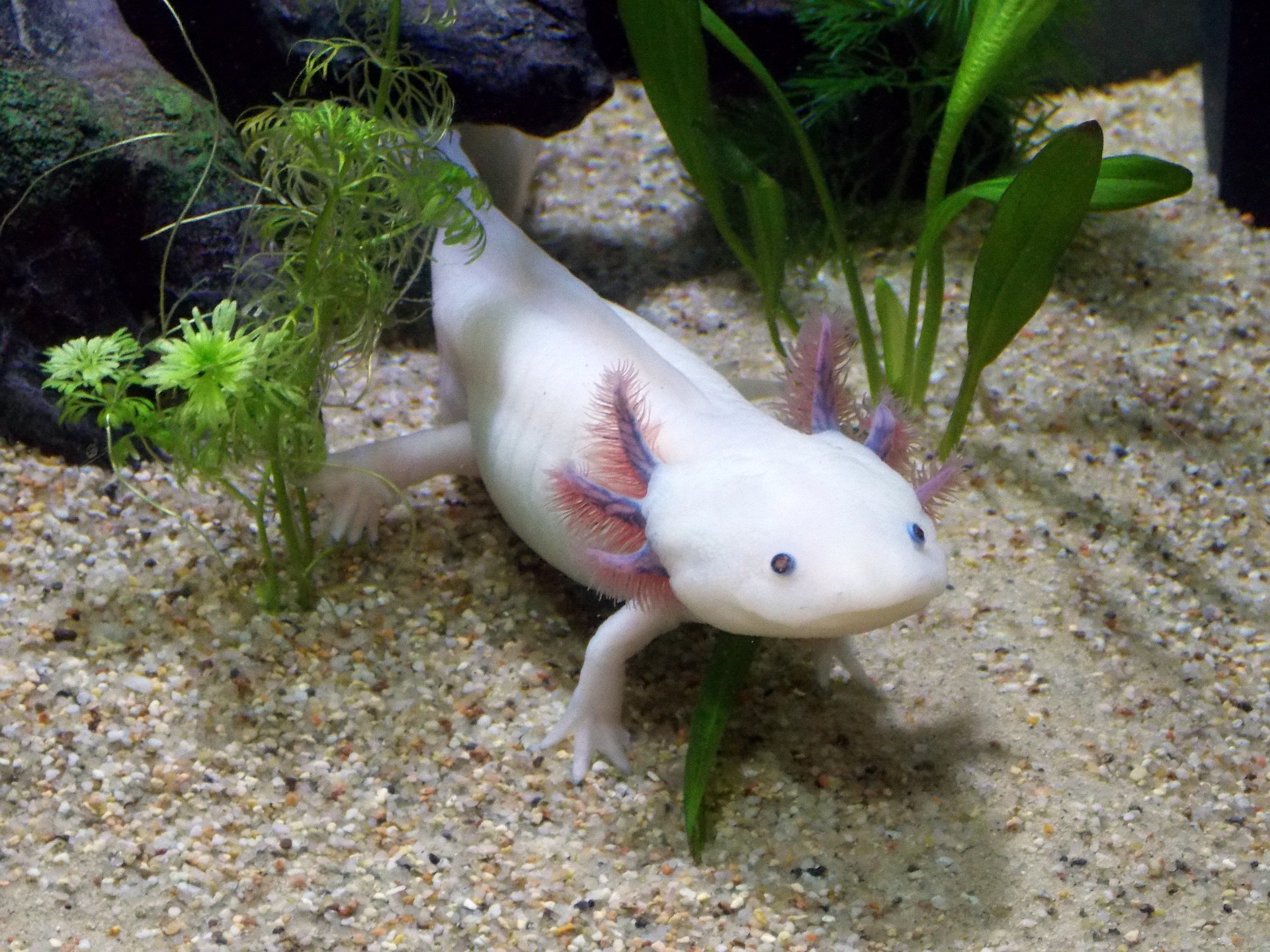
    Dealing with your emotions doesn’t need to be scary. From now on, I will picture my emotions as a cute almond-sized axolotl (albeit an amphibian) on a mission to help me navigate my world.

    What about you? The first step to transformation is acknowledging your emotions influence you. The next is to realize how they influence you.

    To partner with someone who can help you figure out how to manage your emotions and transform your life, contact me. I would love to join you on your journey.

    If you like what you read and believe others will, too, please share. 

  • Learning is Your Responsibility

    Learning is Your Responsibility

    Learning is your responsibility. 

    I tell my kids that all the time. They know they must learn something every day (including days they don’t have school), whether or not someone has taught them anything. The death knell for them would be to come home from school and tell me they hadn’t learned anything. Sometimes I think they scramble for some shareable learning, just so they don’t have to deal with me. I’m fine with that – as long as they are learning.

    During this COVID-19 pandemic crisis, with so much of society shut down, including schools, the mantra “Learning is your responsibility” resonates in our home. My kids realize that even though they cannot attend school, they still need to learn.

    They also know learning doesn’t necessarily look like poring over textbooks and articles. It can, but it can also look like watching videos on how to make pasta then testing out skills in the kitchen or fine-tuning a fingering technique on a musical instrument.

    My kids have only been out of school for a little over a week, and the first week of that was spring break, so we are still new at homeschooling, unschooling, or whatever kind of schooling we are calling this. Armed with the materials their teachers and district have prepared, the internet, and our own curiosity, my kids and I have embarked on a new education journey. We will have our triumphs and our missteps, but it’s my responsibility to keep us moving forward.

    As a parent, I must set the tone of daily learning in our home, so not only do I tend to their learning, I stay cognizant of my own. My kids don’t always ask me what I learned, but sometimes they do, and woe to me if I can’t answer.

    Lately, I’ve been learning about various online platforms. I learned about Eventbrite to create registration pages for upcoming LELA House events. I learned about Doodly to create a video about Octavia E. Butler (my all-time favorite author). I’m learning about Wordpress every day as I blog for LELA House and on my personal blog.

    What about you? What are you learning?

    Even if you’re no longer in school, I encourage you to make learning a daily activity. The article “8 Benefits of Lifelong Learning” urges readers to adopt the practice of intentional learning for the following reasons.

    1. Improving self confidence
    2. Fighting boredom
    3. Maintaining brain health
    4. Learning skills
    5. Modeling positive behavior
    6. Learning for the sake of enjoyment (of course!)
    7. Sleeping better
    8. Staying healthy

    If you want to partner with someone as you figure out how to incorporate intentional learning into your already full life and work to improve your confidence and pursue your passions, please contact me. I would love to join you on your journey.

    If you like what you read and think others will, too, please share.

  • What Questions do You Have?

    What Questions do You Have?

    I have questions. About everything. Constantly.

    In conversation, I ask myriad questions, not because I disbelieve, but because I’m intrigued.  Vast knowledge exists in the world, and I understand so little of it.  I crave to know more.

    I love to learn.

    Learning, however, is difficult and painful. It takes effort to approach, digest, understand, and use a new concept. This becomes especially difficult when we don’t care about the topic. Not caring happens everyday in schools, workplaces, and homes worldwide.

    The concept of enforcement so characterizes learning that we often consider learning a “have to” and rarely a “want to.” We tell ourselves we aren’t in school, so we don’t have to learn.

    I disagree.

    Each of us has something we are learning.  Not only do we not find this thing odious, we may even find it useful or enjoyable. Maybe you’re learning to interpret your child’s cries. Maybe you’re learning to run a business. Maybe you’re learning to garden. Maybe you’re learning to lift weights.

    You’re learning something, even if you don’t recognize what you’re doing as learning. Besides being difficult and painful, learning can also be fun and practical, especially when taken from “have to” to “want to.”

    What are you learning right now? What do you want to learn?

    Learning is a great way to grow, evolve, and transform. A good place to start is with what questions you have. What intrigues you? What have you always wanted to try? What makes you say, How does that work? If you can’t answer any of these questions, ask yourself why not. There is as much to learn about the world around you as there is to learn about the world within you.

    If you want to partner with someone as you question, learn, grow, evolve, and transform, please contact me for 1:1 coaching. I would love to join you on your journey.

    If you like what you read and think others will, too, please share.