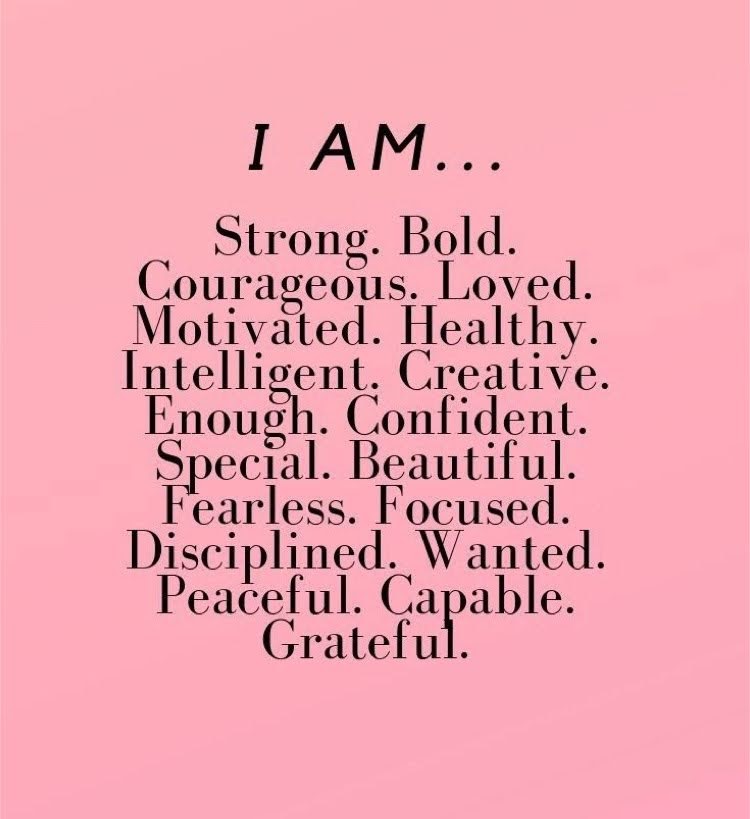
This morning, I challenge you to write down the ways you are strong, bold, courageous, loved, motivated, healthy, intelligent, creative, enough, confident, special, beautiful, fearless, focused, disciplined, wanted, peaceful, capable, and grateful. Then revisit the list every day. Let me know what happens in your life when you do.
Tag: Writing
-

Roshaunda’s Doctoral Journey
Check out the next episode of Real & Raw with Roshaunda where I tell the story of my doctoral journey. Please comment below to share your experiences. And if you’re in the middle of it, let me know that, too. I’m here to help.
-

Writing Authenticity
Check out the next episode of Real & Raw with Roshaunda where I discuss gaining confidence in your writing voice. Please comment below to share your experiences gaining confidence in your writing voice (Spoiler alert – I give you a bit of homework today).
-

Revise with Readers in Mind
Check out the next episode of Real & Raw with Roshaunda where I discuss revising your writing with your readers in mind. Please comment below to share your favorite revision strategies.
-

Summer Session Means Stress for Skeleton Staff
7/10/2017
Good morning fabulous OWC coaches!
Well, the time is upon us when the OWC traffic will ramp up. Students are coming off of the holiday and hunkering down to finish their summer terms. While f2f traffic has been light, the OWC has been busier this year than normal (as you know!). Based on how our numbers have increased steadily over the past AY, I anticipate this summer’s rush may be brutal.
I’ll send papers to you as they come in, and I’ll watch your workload, so I don’t inundate you. Please do your best to adhere to our turnaround time. If you can’t, just let me know, and I’ll communicate that to students as I send them their confirmation notices. Oh, and of course, I’m adding our standard crunch time clause to the confirmation notices that due to increased usage, our turnaround time may be delayed.
Please let me know your schedules, so I can plan out how and when to send papers your way. I appreciate your willingness in the past to work beyond your hours, and I’m asking if you’d be willing to do it again. As always, keep track of your hours, and we will flex your overages when the demand decreases. I’m so grateful for you and how you have handled our crunch times in the past. You all are the best.
Per usual, if anything wonky happens or if any nastygrams come your way, let me know and forward all documentation to me. I’ll handle whatever comes up.
It’s an honor to work with the best OWC team on the planet. I’m awed by how such a small crew serves so many students so well.
Let me know what questions or concerns you have or how I can serve you better.
Warmly,
Laila
-
Session Notes
Higher Order Concerns
- We talked about ways to develop a main idea using the following strategies
- Listing
- Scribing
- Considering readers’ needs and what is missing that will help make meaning
- Essay Organizer worksheet
Lower Order Concerns
I pointed out some patterns of error, including punctuation and how to recognize a sentence and know when sentences begin and end. I sent the student home with a handout on sentence fragments and run-on sentences, but we spent the bulk of the time in the session on developing the main idea.
Student learning
The student learned that a first draft is a great start, not a final attempt, and to reread work with an eye for what readers will need to understand. Student gained confidence in writing ability.
Dr. Jones’ note to self: Glamorous my life is not. Satisfying it is, yes.
-
Introducing Dr. Jones
I have a character, Dr. Laila E. Jones, who runs a university writing center. In my head, her story unfolds through her writing – her emails, journal entries, Teams messages at work, text messages with loved ones, conference proposals, etc. I honestly have no idea where her story will take her or any of us, but I’m excited for her adventure to begin. Below is the first installment.
June 5, 2017
Dear Diary,
Well, that sounds ridiculous – like I’m an angsty preteen, oh, I’m sorry, TWEEN. I sound like an angsty tween. Why even do we use that word? What was wrong with preteen that tween came into existence? I mean preteens were functioning just fine as pseudo adolescents (like pseudopodia perhaps?), and then somebody (who was it I wonder?)
Alright I’m back. According to Wikipedia it was J.R.R Tolkien referring to hobbits in their twenties prior to their coming of age, so it’s a blend of teen and twenty which makes so much more sense now. Why do we even use it for angsty prepubescent children? And should I have written portmanteau? It’s the word that was in my head (probably because it was in the Wikipedia article, but I didn’t have to look it up, so I feel good about that), but it felt pompous and self serving. Can I be pompous and self serving in my own diary? Is this a diary or a journal? It’s a journal. I do NOT plan on doing this daily, despite the advice of my therapist.
So there. Journal reboot begun. And tween is a cool Tolkien word that I should figure out how to repurpose in society, so it’s less angsty. Like me. Ugh. I’m done.
-
Reading, Writing, and Ritual
When my family takes a road trip and we cross a state line, we all do the wave and chant, “[State name], woohoo!” It’s corny, but we look forward to it. At the outset of our trips, our teenage kids ask how many state lines we will cross, and we all keep watch as we get closer and closer to a state line. We look for literal signs announcing a state’s proximity and figurative signs like increasing or decreasing mile markers. When we see a state sign approaching, we make sure everyone in the car has a visual, and we time our cheer when the hood of the car reaches the state line. We do this every time. It’s our ritual.
A ritual is a habit or routine laced with meaning and practiced with mindfulness. We all have habits, routines, and rituals but do not always recognize them. Habits happen so effortlessly, we barely realize we’re doing them. Much to my husband’s chagrin (I’m sure), I crack my knuckles as soon as I get into bed each night. I don’t think about doing it; I just do it. Routines, however, have intent behind them. Part of my bedtime routine is flossing and brushing my teeth. I must think about completing those actions; I’m not on autopilot, like I am with knuckle cracking. Reading is my bedtime ritual.
Part of my reading ritual includes my routine of flossing and brushing my teeth. I don’t curl up in bed to read without having done so. Once I’ve gotten into bed, I grab my book, which lives within arm’s reach on my dresser, and settle in to read. The act of reading carries meaning for me. As I prepare to read, I often think about the gift of literacy and how it was systematically denied to people who look like me. I thank God for the gift of books and the time to read them. I contemplate the power of the written word, and I think about how reading shapes who I am. I anticipate the story arc of my book and wonder what will happen next. I focus on my task, and I relax. I feel my breathing deepen and my taut muscles release. Then I immerse myself in the world on the pages in front of me.
Rituals play an important role in self care. They fill you with awe and expectancy. They allow you to consider your values and how you incorporate them into your life. They help you slow down and pay attention to the moment you’re experiencing, rather than dwelling on past moments or worrying about future ones. They signal your brain to switch into reflection and creativity, which can lead you into a flow state. They can also signal to others you’re experiencing flow. For example, I used to listen to particular music while studying my bible, and my husband knew to give me some time when he heard the music playing. Rituals help you place boundaries around the time and space you need for self care – boundaries both you and others will respect.
Not every habit or routine needs to become a ritual, but reading and journaling are good contenders for busy educators. They are easy activities to practice and to squeeze into tight schedules.
The first step is to make reading and journaling a routine. Some people can create new routines for themselves by the sheer force of their will. I am not one of those people. If you are, I applaud you. If you are not, I have some tips for you.
- Decide you want to read and journal. You get to choose how to spend your time and how you will take care of yourself.
- Tell people you are going to read and journal. They will cheer you on and hold you accountable.
- Experiment. Play with different times of day and different strategies to find what works best for you.
- Determine a trigger that aligns with the results of your experimentation. Pick some recurring event (like walking in the house after work) or habit (like walking on the elliptical) and tie reading and journaling to it. Keep a notebook by your door and pick it up on the way in the house to journal for a few minutes before launching into your evening activities. Decide that every time you go to work out on the elliptical, you will listen to an audiobook.
- Repeat and adjust. Repeat the process and revise as necessary until you have established a routine.
- Show yourself grace. Forming a habit can take anywhere from 8 to 250 days, with the average being 66 days (https://www.quickanddirtytips.com/education/science/how-long-habit). Don’t beat yourself up, if it takes a while to get into a groove. You are learning and growing in the process.
- Reflect. This step moves your routine to ritual. Think about why you’re implementing this activity in your life. Think about how it benefits you and your loved ones. Think about the gift of self care. Think about the activity itself, not your perceived failures of the day or your looming to-do list. Revel in who you are becoming as you partake in the activity.
- Get support. Sometimes going it alone is hard. When you feel isolated, it’s easy to lose resolve and drift back into habits that don’t serve you well and don’t lead you toward self care. If you want to practice reading and writing as rituals with other educators, click HERE to learn more.
Reading and journaling rituals are educator self care tools, not just diversions to slough off. Taking care of yourself as an educator affects all areas of your life. Choose to practice self care today.
* * *I am doing a 31-day series on reading and journaling as self care for educators. Each day of the series has bonus journal prompts. Click to join the LELA House family of educators committed to nourishing their reading, writing, and creative souls. You’ll receive a link to the journal prompts and gain early alerts for upcoming LELA House ideas, courses, and products. You only need to subscribe once. I will add a new worksheet each day to the access link.
Roshaunda D. Cade, Ph.D. is an educator, writer, and creator. She offers life coaching and writing coaching to educators, as well as other opportunities for educators to practice self care through reading and writing. Check out her LELA House website to learn more about her services. Roshaunda lives in St. Louis, MO with her husband and teenage children and enjoys reading, writing, dancing, and pushing her creative boundaries.
-
#IntrovertEducator
I’m an introvert. My journey through self care as an educator speaks as much to my introversion as it does to my love of reading and journaling.
I have adored my work in education. But it is hard, draining, even debilitating. I’ve loved my students and colleagues, and I’ve fully spent myself on my work. This typically left me irritable and unavailable at home. I was at my worst for the people to whom I wanted to give my best. So I fought against my innate introverted nature, which told me to rest, read, create, and write. Instead, I attempted to be who I thought I should be. I could function, and even excel in different areas at different times, but I didn’t thrive.
To thrive in all areas of their lives is my hope for all educators, and self care plays an important role in that. Not every educator finds rest through reading, writing, and creating. Not all educators are introverts, but I know I’m not alone. So I’m trying to support introvert educators by encouraging them to make the time they need to read, write, and create.
But it’s not enough.
It’s not enough to encourage you to read, write, and create without giving opportunity. I’m working on that with some upcoming LELA House events. Similarly it’s not enough to give opportunity without giving time.
I can’t make time, but I can provide opportunity, encouragement, and resources. I believe if someone had suggested I make some time for myself and offered me the chance to pursue my passions, I might have thrived rather than survived. I didn’t recognize what I needed, and being an exhausted introvert educator in an extrovert world made me question myself and my place in education.
Everyone who rests by reading, writing, and creating isn’t an introvert, but I bet a lot of you are. And if you’re like me, you could use a community of other introvert educators – who understand your conflicting needs for solitude and camaraderie; how reading, writing, and creating rejuvenate you; how your superpowers show up differently; how you can love what you do and find it draining.
So let’s talk about it. What’s your life as an #IntrovertEducator? What do you need to make it through the day? Leave a comment to join the conversation.
* * *I am doing a 31-day series on reading and journaling as self care for educators. Each day of the series has bonus journal prompts. Click to join the LELA House family of educators committed to nourishing their reading, writing, and creative souls. You’ll receive a link to the journal prompts and gain early alerts for upcoming LELA House ideas, courses, and products. You only need to subscribe once. I will add a new worksheet each day to the access link.
Roshaunda D. Cade, Ph.D. is an educator, writer, and creator. She offers life coaching and writing coaching to educators, as well as other opportunities for educators to practice self care through reading and writing. Check out her LELA House website to learn more about her services. Roshaunda lives in St. Louis, MO with her husband and teenage children and enjoys reading, writing, dancing, and pushing her creative boundaries.
-
Quick and Dirty Post about Journaling
Journaling does not require a lot of time. I’ll repeat. Journaling does not require a lot of time.
Rules of journaling
- Write at least one thing (word, sentence, paragraph – your choice).
- Don’t backtrack. If you missed a day (or a week or a month) don’t try to recapture what your life was. Just start where you are right now.
That’s it.
You’ve got this.
* * *
I am doing a 31-day series on reading and journaling as self care for educators. Each day of the series has bonus journal prompts. Click to join the LELA House family of educators committed to nourishing their reading, writing, and creative souls. You’ll receive a link to the journal prompts and gain early alerts for upcoming LELA House ideas, courses, and products. You only need to subscribe once. I will add a new worksheet each day to the access link.
Roshaunda D. Cade, Ph.D. is an educator, writer, and creator. She offers life coaching and writing coaching to educators, as well as other opportunities for educators to practice self care through reading and writing. Check out her LELA House website to learn more about her services. Roshaunda lives in St. Louis, MO with her husband and teenage children and enjoys reading, writing, dancing, and pushing her creative boundaries.