
Check out the next episode of Real & Raw with Roshaunda where I discuss racism and equality in my high school experience. Please comment below to share your school struggles with this topic.
Category: unique design
-
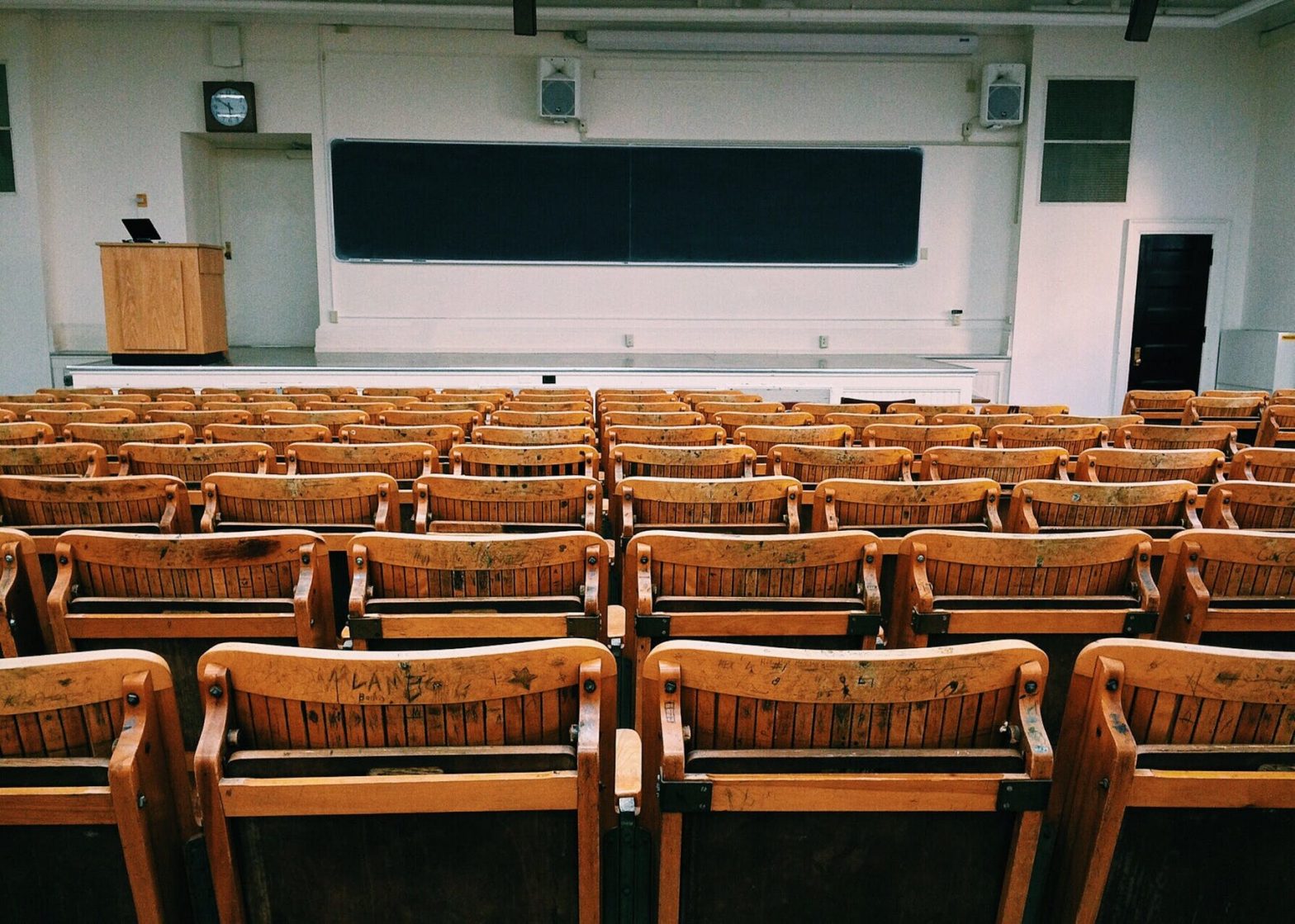
A Different Vision for US Education
I spend a lot of time thinking about the US educational system. I’ve been mulling over some ideas since this summer and never could come up with the right way and the best time to present them to you. So what I decided is to just put out the grand scope of what I’m thinking, (wholly unrefined) and then suss through pieces of it in later posts. And know what follows is the grand scope; it’s not where I want to begin. It also doesn’t entail plans I’m working on. I’m a little afraid to put this out there, but here goes – Real and Raw with Roshaunda at its most basic level.
Currently school is a lot of things, but students basically only get to experience it as one thing. School is traditional, Montessori, Charlotte Mason, home school, charter school, online, etc., but why can’t it be all of those things? People should have the opportunity to pick a la carte style what works best for their children and families. In my vision, families can choose to stick with any currently existing school in its current form, but they will also have the ability to select options from various schools and community organizations that best meet the needs of the children and families.
For example, a family with guardians who work traditional 9-5 hours might decide to send their children to one school that lasts all day. A different family with guardians who work less traditional hours might decide to send their children to one school in the morning and avail themselves of other options in the afternoon.
Private schools will remain privately funded and operate however they want (but, of course, they’ll want to join the tide). But public schools (traditional, charter, etc.), home schools, community organizations, libraries, etc. would team up to be able to offer options. These would all be publicly funded. Since we’re basically exploding the idea of neighborhood schools with this concept, however, the tax monies levied for education would be allocated to regions, rather than to individual school districts. Then every student in the region would have access to the same educational opportunities, but they would be able to choose which opportunities work best for them. Private schools could offer to families, for a prorated fee, some of their experiences. For example, if a family wants their children to have religious education as part of their children’s experience, they could have their children attend weekly chapel services for a fee. I’m actually fine with private schools participating in this grand scheme. I think they should be mostly funded privately, but if they employ nationally certified faculty (more on that later) who avail their courses to the public system, they can get some funding for that. The funding might be based on the number of nationally certified courses they offer. In this way, if a public education student’s family wanted them to take a Christian-based science class, for example, but otherwise attend the public school experiences, they could do so. And this would be the case for all private schools, faith-based (regardless of faith) or not. There might be a private school, for example, that offers a class in circus skills, and a students wants to take that one course but still follow the public school experience. Students would have to be limited to one private school course per year or session or something. I don’t want to gouge the private schools by having families use a public school back door to get their students to attend private school. Expenses like uniforms, etc. would be the family’s responsibility.
Some experiences, like athletics and music, for example, would have to be centrally coordinated, since you need a lot of students to play on a team or in a band. I would like to see something like the following. Athletics offered early in the morning to mid morning, before academic offerings. Teens literally don’t have the brain power for academic work in the morning. Starting schools late would just lead to everything in everyone’s lives getting pushed back later, so I advocate instead for physical activity to be the first part of students’ days. It will actually help them be more prepared for academic work later in the day. Right now many students who are athletes and musicians and theater people have to choose, since all of these activities happen after school. Putting sports in the morning and arts in the afternoons will help students be able to pursue both sides of themselves. Students will still have choices to make, of course. Maybe you can’t be on the football team, in the band, and on the drama team. These communal activities could be offered by schools or community agencies as appropriate for each region.
In what I’m envisioning, librarians, resource center directors, community liaisons, school psychologists/coaches, and teachers would be the rock stars. School will rely heavily on educators who understand how to manage and disseminate appropriate information in the appropriate way to the appropriate audiences at the appropriate times. And the whole school experience would be managed by an app.
Each family would get a team to work with them. There would be 3 coaches/school counselors/advisors assigned to each family. These 3 advisors will stay with the same family as each of the children in that family grow up. One would have expertise in pre-K through middle; one would have expertise in middle through high school; and one would have expertise in high school through graduate/professional school. Families often have multiple children who are at multiple stages in their school journeys, so having this team of 3 will allow for continuity throughout all of the children’s journey. All of the counselors will get to know the family and the children well and will have great insight into their values and areas of giftedness and challenge. These counselors will meet annually with each family to discuss what options will be right for each student. They can also meet more frequently, if necessary, to course correct throughout the year. This set-up also allows for summer activities, such as camp or summer school, to be designed to enhance the learning experience.
Community liaisons will work with each family team as well, but they do not need to have permanent family assignments. The community liaisons will be experts in what sorts of schooling are available in which subjects in which locations, so they can direct students and families to the desired type of educational opportunities. This will allow for individualized education plans that fit each student’s needs and wishes. This will work for all students of all abilities. Because families have this level of choice, they won’t be bound by what must happen in x or y grade level. Students will progress at their own pace. Some years they may bound ahead quickly, while other years they may slow down. For students who currently have IEPs, etc., the advisor team will already know and will be able to give input to the community liaisons. Community liaisons work with the family and the advisors to create what will work best.
Every different student would have a different plan. Some students thrive in the traditional education model, so they can do that all the way. Some students don’t. And some students don’t know what would work best for them, because they have never had the opportunity to try out something different. Some students have parents who speak multiple languages and run businesses and are willing to teach these to their children. Some parents cannot or do not want to take on this responsibility. That’s fine. This is about doing what is best for the students and the families. Some parents would be comfortable teaching their elementary school students, while others would be comfortable teaching their high school students. These are reasons for the annual planning meetings. In this new system, how students receive their education experience can vary widely year to year. Students change dramatically from PK through undergraduate, so why shouldn’t the education they experience be flexible to accommodate those changes? This type of education, however, will require immense coordination. Enter the app.
This would be a super robust app, because it would be the one-stop shop for everything needed for school. It would have school schedules and offerings in real-time, so the family teams could determine which experiences to sign up for. Students could access online learning there. Sports schedules, etc would be housed there. Each user could customize the app to only show what is relevant to them, but all of the other stuff will be running in the background if they ever need to check. The app would also be the place for certification requirements and ongoing professional development for educators.
And I’m talking about regional education. While it’s certainly conceivable that a student in St. Louis could take courses with students in California, using technology, the idea here is to build up communities and use what is in your community and add what you can to your communities. So in the St. Louis region, all students would have access to all public school teachers and activities.
The goal of offering school in this way is to help students learn their unique designs, become critically engaged, and transform their communities. Those just happen to be the themes of LELA House. Look what God did just there! This is an education system that prepares students for life, not just the next exam.
Teacher education programs would have to change as well, but maybe not as drastically as it might seem. We will still need great classroom teachers who know their content and have creative ways of engaging students. They will need to learn, however, ways to deploy that online and remotely. Ideally, however, class sizes will decrease, so they won’t have to spend all of their time managing behaviors rather than teaching their passions. We will need more people trained as coaches/psychologists/advisors and as community liaisons. We will also need more librarians and resource specialists.
Following an IB model of assessment will help US students be better prepared for overseas study, if that is their interest. Also, I didn’t explicitly state that technical education is included in this. Some people were born for culinary school or to be artisans and craftspeople. Let’s encourage that. We need plumbers and chefs and woodworkers just as much as we need every other profession. This system of education removes the stigma from attending technical schools and allows students who attend them to still participate in other experiences with other students. This way everyone will know someone who attends a technical school and a traditional school and is homeschooled and everyone will be able to find common ground and talk to each other, instead of the divide we have now.
This type of system will also decrease many of the educational challenges faced by people in under represented groups. They will, at least in theory, have the same access to high quality education. We will still have to work on ways to counteract the technology gaps caused by lack of access and transportation difficulties, for example. Even with these challenges, they won’t, for example, be only relegated to the poor neighborhood schools in their poor neighborhoods. And they will have more funding flowing into their educational experiences since money will be for the entire region, not just the district. This particular idea aligns with the idea of joining St. Louis City and St. Louis County.
We’ll also need to be careful of the family teams assigning students to education experiences based on their preconceived notions of who that student is based on where they live, how they look, or how they talk.
When students are ready for college, the system would continue but a little differently. Private colleges and universities could opt out, but state university systems and community colleges would be opted in. Most students will choose to attend one college and focus on whatever is good for them, instead of the a la carte plan. Students wouldn’t have to go to colleges in their regions, if they choose not to. We would just have to make sure there were clear articulation agreements. Also, the counselor/advisor/coach would stay with students for their first year in college but would gradually wean students off of them and onto counselors/advisors/coaches with expertise in their specific college. Students could begin college courses whenever they are ready to do so, in whatever discipline. So say Donte, for example, is ready to take college calculus, but he’s still working his way through high school level English, he can absolutely do both at the same time. If we keep the current college credit system, Donte would earn college credit before he receives his IB-style diploma that will count toward fulfilling his college graduation requirements, whenever he begins college proper.
With this system, I’m not trying to dismantle the personality or characteristics of any types of communities or schools. HBCUs can still be places that pride themselves on educating African Americans. What this will do, hopefully, is give them more funding than they currently have and a broader base of faculty and students. If a region of a state is largely populated by indigenous people, for example, this system would just provide more funding and resources for them; it would not eradicate their uniqueness. It might actually help others understand their cultures better. If non-indigenous students from the region find themselves in classes with indigenous students and teachers, they will learn. Oh they will learn. And in Donte’s example, if one school session he wants to learn more about indigenous people, his Montessori history teacher can hook him up with a class that teaches just that by people who are passionate about it. It’s all American history, so everyone should have a chance to be exposed to it.
I would recommend against each state being a region. Some states are so large or so populous while other states may have smaller populations (even if they are large), we wouldn’t get the equitable distribution of resources that I’m envisioning. Maybe we take the 2020 census results and determine region sizing based on population (and ability to travel to in-person education experiences). Some regions might span over multiple states while some regions might be a metropolitan area (that may or may not span multiple states – thinking of St. Louis and Kansas City in particular).
Oh, I forgot to mention that in addition to the annual family meetings, the counselors/coaches/advisors will hold regular meetings with the students to learn more about them and what makes them tick. In essence, the students will benefit from regular coaching that will help them discover their unique design and stay motivated to become critically engaged. The coaching will also help them discover how they can transform their community. As the students age up, the coaches will have created a plan to transition them to the next coach with expertise in the new age group. Coaching for pre-k students will look like whatever that looks like for kids that age. Playing? I don’t know. Parents will be in the coaching sessions with younger children, of course, but coaches will ask permission to meet with the students individually when they reach middle school or high school. Students can request this or not. Some students may not be comfortable fully engaging with their coaches with their parents around, but we certainly will follow all parental wishes. They are minors, after all.
Educators will require a lot of professional development and time for self-care. This style of education goes in a lot deeper with students and their families than we do currently.
Students would still have social activities like dances and prom and football games. They would just happen within regions. Sporting events will have to be coordinated to know which teams play which other teams and when. But students could find on the app the team’s they most closely align with (if they don’t already play for one) and get their schedule to root them on. There could even be some friendly rivalries between teams within regions. As far as dances or game nights, etc. go, I could see two ways of planning them.
The first is that a region hold all of its proms, for example, on the same night. Students could choose which prom to attend, and they could even go prom hopping later in the evening to catch up with their various friends. This would mean that all guardians would know that everyone is doing prom on the same schedule, and it might make it easier to plan accordingly. Plus I think this could be fun for the students. It would be much easier in the app. Just plug in which prom location and get all of the details for it. Neither students nor guardians would have any confusion about when prom was.
The second is that a region space out all of its proms, for example. It might be difficult on industry (depending on the region’s size and its access to vendors) to provide enough dresses, tuxes, drivers, restaurants, DJs, venues, etc. to host multiple proms in one evening.
Many education decisions will be handled at the regional level (with input from students, parents, faculty, administrators, etc.), but it will be a national system. IB mastery training will be completed at the national level, so assessors will all assess on a similar standard. That way, when students move across regions, it will be easier to understand where they are and get them moving on a path that’s right for them. Some teacher training would be national also. Zoning regions would come from national information (the census, for example) about regional demographics. Teachers, coaches, etc. could earn national certification, and then whenever they move across regions, their certification would remain valid. We should also have a national benefit and retirement program for teachers, so that some regions don’t attract better teachers than others. Public education (PK through undergraduate) would be free, but graduate school and professional school would probably have costs. So there would still be federal loan agencies to manage. Plus, private education would still have costs associated with it. So yes, we will still need the US Department of Education. App management would have to have a national component as well. People (advisors, parents, students, anybody, really) will have reasons to discover things happening on a national scale. A cross-country move is one of them.
Smaller class sizes, along with more distance learning, will, most likely, lower the ability to spread infection and decrease the number of school shootings.
The St. Louis question “Where did you go to high school?” really wouldn’t exist any more. Some people will still attend traditional schools in the traditional ways. Some people will do that PK through undergraduate and some people will only do that for a few grade levels here and there. How fantastic to have a system that allows for that much individualized flexibility in a national schooling system.
Speaking of national system, even students who attend traditional school will still have to complete IB-style papers or projects. It’s a national system, after all, intended for all of the nation’s learners. Private schools will have to tend to their own accrediting bodies, but it would behoove them to look at accreditation that aligns with the national system, at least in some ways. Similarly, students who are entirely homeschooled (although with this system, it seems like most people wouldn’t choose to not avail themselves of any of the public education experiences) would have the opportunity to pass an IB-style assessment. It could be a paper or project, or it could be oral and/or written exams. They wouldn’t be mandated to do so, but it would probably help them gain entrance into college or trade schools. Plus, home schooled children often advance very quickly. I would think homeschool families would gravitate toward being able to access college classes as students become ready for them.
Every region would need a great public transit system that people could access at low cost.
So here’s an example student, Donte, who is ready for geometry. The community liaisons will know if there is a geometry class that meets on Mondays, Wednesdays, and Fridays at 10am, and if that class accepts in person students, virtual students, or both. There might be a student, for example, who goes to the neighborhood school for football practice in the morning then comes home. He’ll be ready for geometry at 10a. There is a class at a school not local to him, but he can join the class virtually, so he does.
After that, he works with a writing coach. He loves to read, but writing is a struggle for him. To feed his love of reading, he’s working with a librarian who finds novels for him, but also helps him research for his other courses. The librarian and writing coach collaborate to create assignments that he’ll be interested in and that help him hone his literacy skills. Once a month he meets with a book club run by an English teacher to deconstruct the work all of the students have been doing.
Then maybe his mom is a bakery owner who also speaks Spanish, so he spends the afternoon working in the bakery learning baking, business, Spanish, customer service, sanitation, etc. Maybe on Tuesdays and Thursdays he studies history and science. He’s super interested in American history, so he works with a Montessori teacher who helps shape his inquiry and research. Nearby is a science center that offers students different club experiences. One session is gardening; one is weather; one is fossils. This way student get hands-on exposure. Two times per week, in the late afternoon, he participates in the drama club.
So in any given week, Donte, gets a lot of in-person interaction with a variety of other students. Some of them will be his age, and some of them won’t. He gets physical activity in his sport, in his bakery work, and in his science clubs. Plus he also gets activity from walking or biking to the locations that are close. He’s able to pursue his passions with individualized instruction. He gets individualized support in his areas of challenge. He gets to interact with a variety of adults who are invested in his well-being (which has a host of benefits beyond education). He increases his technology skills by attending school virtually. He learns to navigate public transportation on his bus ride to and from the physical school everyday, which also helps him learn about navigation/streets/directions as well as social interactions in public spaces. He has arts education through drama club. He’s bonding with his family and strengthening community ties by working in the family business. Donte’s learning a variety of subjects in ways that make sense and are practical. Also, Donte isn’t bound by grade. He can study what he needs to study when he is ready to study it.
Yes, assessment points will need to exist along the way, but let’s take a page out of the IB diploma curriculum. Students write papers or create projects that demonstrate their mastery. In this form of schooling, a paper or project could encompass many areas of learning. Donte could, for example, do a project of the flora and fauna in the Revolutionary period. The project could be a film with an original score and Spanish subtitles. He could play the film at a film opening event that he designs and caters, creating unique displays for the food and decorations. The film could be played live but also simulcast to a virtual audience. So in this project, Donte uses geometry and building techniques (display design, set design), English (script-writing), science (flora and fauna), history (Revolutionary era), technology (filmmaking, simulcast), art (filmmaking, set design, display design), Spanish (subtitles), music (original score), business/catering (event planning). Plus he’s creating an experience for his friends and family to learn and enjoy, so he had to take into account ideas such as audience and rhetoric (English) as well as display empathy and connection (planning the event in a way that’s accessible to multiple audiences).
A team of assessors (most likely his teachers and guides + some outside people) will evaluate the project to determine if Donte has demonstrated mastery of the skills (which of course he has, because throughout the entire year he has been engaged in meaningful learning). The assessors will give him feedback on his project. If Donte by some weird fluke doesn’t demonstrate mastery, he has the opportunity to review the feedback that details his challenges, meet with resource specialists in those areas, and have another opportunity to demonstrate mastery in a more traditional form such as an oral or written exam for each separate subject that needed it. Additionally, Donte doesn’t pull off this whole thing without any help, so he has learned how to figure out where his own knowledge gaps are and how to seek out mentors and ask them to help him.
And that’s what I’ve got for right now. Some of my thinking has evolved since writing this, but it’s a good start. What do you think?
-

Parental Choice
Check out the next episode of Real & Raw with Roshaunda where I discuss parents choosing the best school options for their families. Please comment below to share your pandemic school struggles.
-
Revise with Readers in Mind
Check out the next episode of Real & Raw with Roshaunda where I discuss revising your writing with your readers in mind. Please comment below to share your favorite revision strategies.
-

Difficult Feedback
Check out the next episode of Real & Raw with Roshaunda where I discuss a bit a difficult feedback I’ve received and how it transformed my life for the better. Please comment below to share your difficult feedback and the lessons you’ve learned.
-

Mini Manifesto
I desperately believe that every child deserves to have the chance to attend a high quality, free, public neighborhood school. And I believe I’m called to help that be a reality for more children than currently enjoy that right. Having access to such an education is a right, not a privilege. Whether families send their children to those schools is their choice, but the schools need to be available. To everyone. Everywhere. Not just in the swanky suburbs.
My parents went out of their way to live in places that afforded me just the education I tout. I am grateful. I am so grateful that I want everyone to have the same education available to them.
Why can’t every neighborhood have a great school? Why can’t every school be accessible in myriad ways? Why can’t kids walk or bike to school every day? Why can’t kids of all kinds of socio-economic statuses expect to receive a phenomenal education without worrying about how much it costs? Why can’t kids have all the recess their little bodies need so their big minds can work better? Why can’t art and music and social studies be part of every curriculum?
Why don’t we demand more?
As much as I’ve ranted, my goal isn’t to complain, because, to be perfectly honest, I’ve not done my best to be part of the solution.
So I’ve got to stop being part of the problem. This mini manifesto was step one. Share your step one in the chat.
-

I Have Questions
Check out the next episode of Real & Raw with Roshaunda where I discuss tips for holding an engaging conversation by asking good questions. Please comment below to share your tools and tips.
-
Reimagining Education
I spend a lot of time reimagining education. I love education and have been blessed with an amazing one, but as a system, education can be better. By better, I don’t mean test scores and numbers (although those have their place). By better, I mean education can better serve its learners, educators, and communities.
I lay no blame (at least I try not to, but I find the highest level of US education leadership aggravating). From what I see, everyone is doing their best, and especially now during the pandemic, doing your best is a herculean task. Even amid everyone’s best, I still see room for reimagining education. So I do.
I’m certainly not an education outsider. I’ve worked professionally in K-12 (English teachers – woot woot) and in post-secondary in the following areas: residence life, student support, student success, academic support, diversity and inclusion, faculty development, academic integrity, and writing. Plus, I’m a mom of two kids who attend a public magnet school. My kids have also attended traditional public, transfer public, charter public, and private religious schools. Despite spending my entire life in education, I often feel my ideas of reimagining education fall way outside of the norm.
But I also feel like I can’t be alone in my reimagining. I feel others, like me, have all kinds of education ideas. And I believe education reimagining shouldn’t only concern educators and policymakers. Artists, ministers, scientists, mathematicians, entrepreneurs, nonprofits – everyone in our communities – should play a role in how we reimagine education. Some of our ideas will resonate, and some will clash. But I’d love to open a conversation about all the ways we are already reimagining education.
I will post weekly about some of my reimagining, and I’d love to hear about yours.
-
Writing Coaching with Robert
Check out the next episode of Real & Raw with Roshaunda where I do a bit of writing coaching. My friend and fellow life coach, Robert Hughes, wanted some help in the prewriting stage of the writing process, and what resulted was an impromptu coaching session. Take a look to see what writing coaching can look like, and comment below with any questions or “Aha!” moments you may have.
-

Journaling for Transformation: 31 Days to Discover Your Next Step is now open!
Stop struggling to discover your next step, and start journaling instead! Journaling for Transformation will help you cultivate a journaling habit and discover the next step of your transformation.
You can access Journaling for Transformation by clicking HERE!
In addition to all of the bonuses the course already offers you, if you purchase the course before Thursday, 9/17/20, you will get a FREE one-hour coaching session with me! I can’t wait to meet you and talk about your next step.
As a reminder, this is what you get with the course.
- daily encouraging emails
- reasons to incorporate a daily journaling habit into your life
- tips on cultivating a daily journaling habit
- practice journaling to daily prompts
- strategies to fit journaling into your busy schedule in just 10-15 minutes per day
- 31 brief video lessons (approximately 5 minutes each – yes, you have time to squeeze this into your day!)
- 31 daily journaling prompts
- Workbook for your 31 daily journaling prompts (the workbook is a fillable pdf you can download and print or use right on your computer)
THAT’S OVER A $100 VALUE!
But since it takes an average of 66 days to form a habit, you get 35 more days of journal prompts!
After course completion, you also gain access to the following….- 14 additional journaling prompts delivered daily after course completion
- 14 bonus prompts in your workbook (31 daily journaling prompts + your 14 bonus prompts = 45 days of journaling)
- 14 additional daily encouraging emails
- My pdf/flip book Journaling for Self Care and Self Discovery
- Journaling for Self Care and Self Discovery Workbook that has 21 journal prompts (the workbook is a fillable pdf you can download and print or use right on your computer)
- 21 additional daily encouraging emails
- Link to LELA House journaling prompts archive, so you can have ongoing access to journaling prompts
- And the BIG BONUS – a free 1-hour one-on-one coaching session with me, if you purchase this course before September 17, 2020!
THAT’S A TOTAL OF AN ADDITIONAL $150 OF BONUSES!
This means you’ll get a personalized, 1-on-1 coaching session PLUS 66 days of encouragement, journaling instruction, and journaling prompts delivered to your inbox each day (a $250 value) for only $47!
Purchase Journaling for Transformation now and reserve your free coaching session.
I’m so excited for your transformation!