Join me for a 90-minute co-working session!
Tag: reading
-
Three Ways to Work with Dr. Roshaunda
Hi y’all,
I’ve got big news!
I am an Author Accelerator certified book coach!
So what does that mean? Let me tell you.
Author Accelerator is a year-long (approximately) course that trains people to become book coaches. Per the Author Accelerator website, a book coach is an editor, a mentor, and a cheerleader; a sounding board for creative ideas; a committed partner; an independent expert; an entrepreneur; a human.
That last one–human–is very important in today’s world of AI. I’m not an AI detractor. I think it can be a great tool, but AI cannot write or read like humans do. AI cannot respond to a writer or their manuscript with expertise and compassion, with creativity and insight, with grace and accountability, with passion and love.
And that’s what I do as a book coach: respond to you and your writing with expertise, compassion, creativity, insight, grace, accountability, passion, and love.
So how is that different from what I’ve been doing? Let me tell you.
It’s not so much different from what I’ve been doing as a coach for Black women in higher education as it is a beautiful expansion of the coaching I do for Black women in higher education.
To my decades of experience in supporting academic writers, I’m adding dozens of practicum hours in fiction coaching: including how to move from idea to outline, from outline to draft, from daft to manuscript, and from manuscript to pitch package. And friends, these lessons do not only apply to fiction; they apply to academic writing as well.
Not only can I now support you in your fiction writing, I can also help you bring the possibilities inherent in fiction into your academic writing. You want to work on the narrative arc of your nonfiction? I’ve got you. You want to narrate your nonfiction through the lens of a protagonist? I’ve got you.You want to frame your nonfiction in such a way that one scene causes the next? I’ve got you.
My new certification as a fiction book coach enhances my ability to support Black women in higher education in all the ways. In other words, I’ve got you.
So, my beautiful Black sistahs in higher education, there are three ways to work with me: SDJ, Dissertation Deliverance, and Strategic Semester. And you don’t have to choose just one. I recommend SDJ for everyone and then add Dissertation Deliverance or Strategic Semester, depending on what kind of writing you’re doing. Of the three options, choose one or two to best support your current needs and your future aspirations.
SDJ (Sistahs on the Doctoral Journey) is a community of Black women in academia (from ABD through senior leaders), who support, celebrate, encourage, connect, and build together.
Dissertation Deliverance: Weekly Accountability Coaching is private, personalized 1:1 coaching to help you navigate your doctoral journey once you’ve completed your coursework. You may be doing self-directed work, but you don’t have to work in a silo.
Strategic Semester: From Idea to First 100 Pages in 16 Weeks is a 16-week cohort for Black women in higher education. You will go from being unsure of how to start your book project (fiction or nonfiction) and struggling to create a writing habit to having dedicated writing time, a blueprint for your book, and your first 100 pages.
So what should you do right now, now that you know all of these wonderful things about my business and book and writing coaching?
- Hug a human who means a lot to you, being grateful you get to exist in a world of beauty, writing, and humanity.
- Sign up for at least one of the following: SDJ, Dissertation Deliverance, and Strategic Semester
- On the off-chance you don’t sign up for any of my services, share this post with your network. You can repost on your various platforms; send the link to a friend, family member, or colleague; or even become a financial sponsor for someone you know who needs my services.
Happy writing, and may God bless you on your journey!
-
3D Divas
Y’all, I’m in tears right now. Happy tears.
I just attended the successful doctoral defense of one of my Dissertation Deliverance clients. She was brilliant. Composed. Captivating. Insightful. Ready. She was ready to discuss what she has studied, ready with a thorough presentation, ready with insightful answers to rigorous questions, and ready to be a force in the world as an authority in her field. It was glorious to behold.
And humbling.
I got to be in the Zoom where she became a Ph.D.-wielding Black woman. I got to talk with her through the ups and downs of her process. I got to help her create schedules and timelines that allowed her to meet her goals and honor the human who has needs outside of academia. I got to read her dissertation before the world would know of the genius contained therein. I got to view the slides prior to today’s presentation. What a blessing to get to do this with her.
And with others.
I love my job.
Dissertation Deliverance clients are on a roll, if I say so myself. I have had the distinct privilege of supporting three new Black women doctors in the last academic year. And I am so proud. Y’all, the work they are doing is important in their respective fields of study and important in the world. They have created frameworks and communication styles and standards of practice. Their work will transform how we look at Black women’s mental health, how we approach teaching composition, and how we combat food insecurity for oncology patients. These extraordinary Black women are prepared and ready to take their places, go through doors, break glass ceilings, and transform their communities and the world.
I wasn’t going to write to share this, because I didn’t want to seem like I was bragging on myself. But these women did the work. And it was a lot of work. The world should know. And me? I had the distinct pleasure of providing a little support along their journeys.
So congratulations to the new Dissertation Deliverance Doctors! You have earned this achievement, and I can’t wait to see how you let your lights shine.
The world is waiting for more Dissertation Deliverance Doctors. I can’t wait to support you along your journey.
Oh wait! I just had an idea! You know Guy Fieri’s Triple D (Diners, Drive-Ins, and Dives) on Food Network? Dissertation Deliverance Doctors could be the new Triple D. (Except I’m not about to get into a trademark infringement war with Guy Fieri. Nope. Not me.) What about the 3D Divas? I like it! I think I just made a thing, and y’all got to witness it in real time. Woohoo! I think we’re going to need some merch.
-
My Philadelphia Era & My Book and Writing Coaching Era
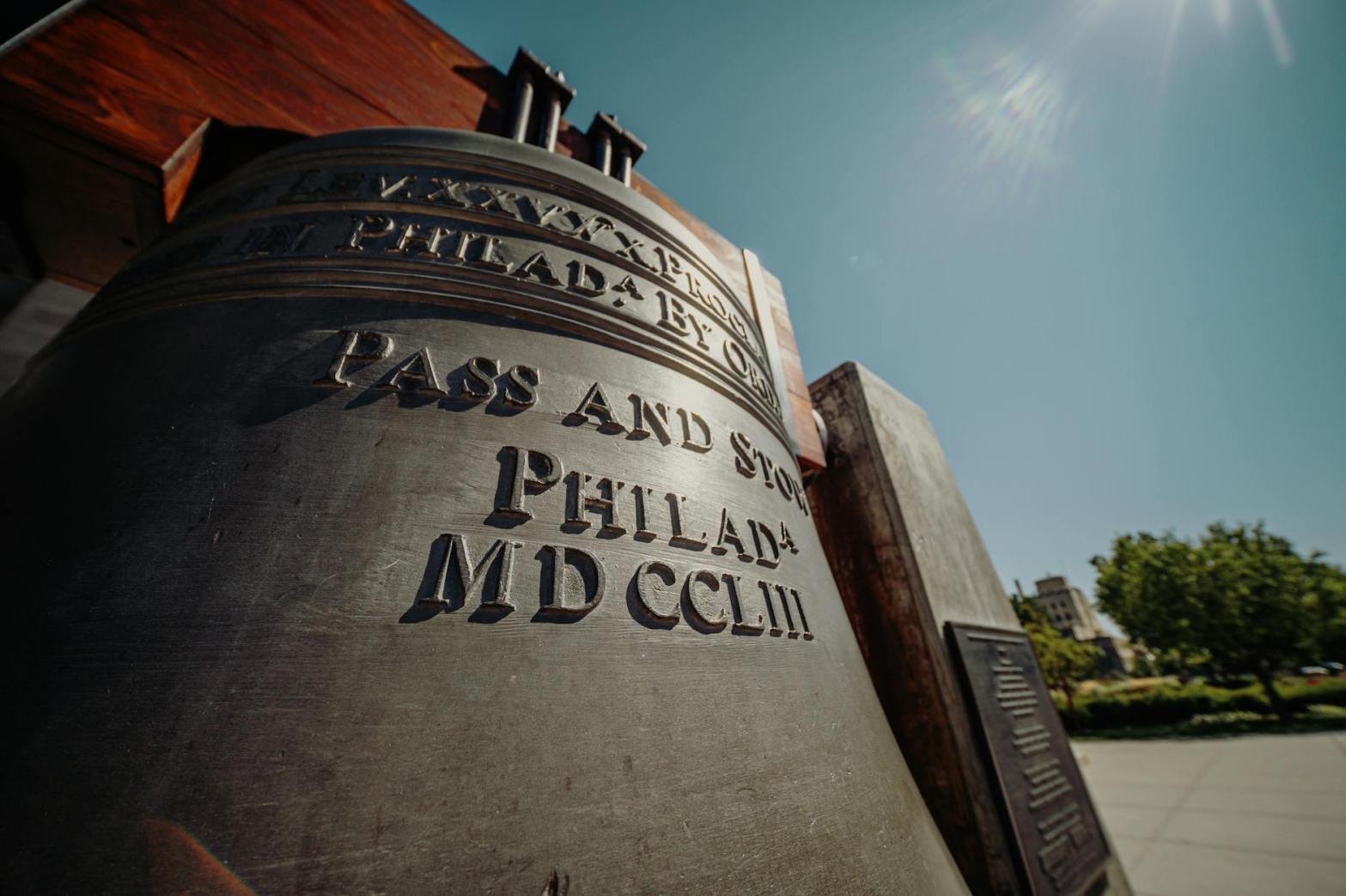
I believe I have entered my Philadelphia era in my reading. As you know, I have a love-hold relationship with Libby. I put books on hold, and they are all invariably delivered to me when I cannot read them (usually because I’m already reading several books when several more get delivered to me). So I postpone delivery of the books, and the vicious cycle continues.
I recently finished reading Unexpected Diva by Tiffany L. Warren (after several rounds of Libby holds and deliveries), and I’m currently reading The Grimkes by Kerri K. Greenidge, along with several other titles as well, but these are my Philadelphia titles. And previously I was reading All We Were Promised by Ashton Lattimore. I started Unexpected Diva several months ago and was in an unhealthy relationship with it via Libby. The main character feels like we would be friends in real life. I’m on my first round of reading The Grimkes. It will go back into the infernal hold loop soon, but I’m enjoying that book as well. The various races of members of the Grimke family have always fascinated me, and this book is taking me on a deep dive into how they navigated having family on opposing sides of racial lines. Both books have a lot of action in Philadelphia, and I feel like the people in them surely would have crossed paths.
Unexpected Diva is a biographical novel, and The Grimkes feels just shy of being narrative nonfiction. I love how both books blur the line between fiction and nonfiction. The authors are adept storytellers.
I started All We Were Promised a while ago, and it got swept back into the depths of Libby. Like other books, I allowed it to wallow in Lake Libby, likely never to return. Now that I’m in my Philadelphia era, however, it has come back to mind, since it takes place in Philadelphia. I want to read it alongside these other Philadelphia adjacent books; and thus, I have reentered into the Libby hold cycle.
Also interesting to me is that the action of these three books coincides with the 1850 Fugitive Slave Act. I’m discovering I’m endlessly fascinated by the 1850 Fugitive Slave Act. I studied that law while writing my dissertation. In my dissertation, I looked at four novels written during the 19th Century that had action taking place circa 1850. I examined Uncle Tom’s Cabin, by Harriet Beecher Stowe; Clotel, by William Wells Brown; Bondwoman’s Narrative, by Hannah Crafts; and Pudd’nhead Wilson, by Mark Twain. I explored how enslaved women manipulated race and gender to find freedom for themselves and their children, with the burgeoning Women’s Rights Movement and the 1850 Fugitive Slave Act as backdrops. When I studied the 1850 Fugitive Slave Act while writing my dissertation, I did not know I would still be intrigued by it 16 years later.
My Philadelphia era also brings to mind Midnight by Beverly Jenkins, which takes place in Boston. While Boston is not Philadelphia, like Philadelphia, it is a site where US freedom was contested during the early years of the United States. Also unlike the three books mentioned above, Midnight takes place during the US War for Independence. But, like the aforementioned books, Midnight highlights the tenacity and spirit of African American women in the US during the long 19th Century by offering glimpses into the lives and hearts of these women and telling their narratives as primary to the foundations of the US, not ancillary.
I love a good book with action set in the US during the long 19th Century (which spans approximately 1775-1920), especially if it considers the lives of African Americans generally, African American women specifically, and the multilayered system of enslavement that pervaded every facet of life in the US. I recognize that may sound super niche, but I find I always have books to read on those topics, both fiction and nonfiction. Some are novels; some are academic; some fall in the space in between. Some are Westerns; some are romance; some are biographical. Other books I’ve read recently include James, by Percival Everett; Hester, by Laurie Lico Albanese; They Were Her Property, by Stephanie Jones-Rogers; and Abolitionist’s Daughter, by Diane C. McPhail.
I love books written during the long 19th Century, and I love books written about the long 19th Century. I read all kinds of books written during a variety of time periods, but I always have at least a couple of 19th Century books in my reading pile at any given time.
Because I love that time period so much, I’m a writing coach for people who set their writing during the long 19th Century. And if you write about the lives of African Americans generally, African American women specifically, and the multilayered system of enslavement that pervaded every facet of life in the US, then I want to work with you! I coach both fiction and nonfiction writers, and I have worked for years with nonfiction and academic writers, but today I’m specifically looking for fiction writers.
I’m in a book coaching certification course through Author Accelerator to learn more about the process of bringing a work of fiction to life from conception to publication. As part of the course, I get to work with three practicum clients as part of my training. Practicum clients will cover the life cycle of writing fiction.
The first practicum client should be early in the writing process. If you have an idea and would like support in fleshing it out and moving it forward, then I would like to work with you. You would complete a manuscript blueprint and have a Zoom call with me to discuss how to write forward.
The second practicum client should have a completed or nearly completed manuscript. If you are at this stage in your writing, I would love to work with you. In our work together, I would review your manuscript, write an editorial letter, and hold a Zoom call with you to discuss revision strategies.
The third practicum client should be ready to query a publisher. If you are at this stage of your writing, I would love to work with you on a query letter.
If you’re interested in working with me as a practicum client, please message me! I would love to talk with you about your work and how I can support you.
And if you made it this far, you’re likely interested in US literature set during the long 19th Century, you’re in a locale-specific reading era, or you are wallowing in Lake Libby. No matter what prompted you to the finish, you are my people! What have you been reading and writing lately? Let’s chat.
-

Cultural Custodian
Hello!
How are you? I pray you’re well.
I’m doing fine and dandy, thank you very much.
Last time I wrote, I mentioned I’ve come to consider myself a cultural custodian for black women, and I promised I’d elaborate on that idea.
Lately I’ve pondered a lot about my career, and what I love to do, and what I love to read, and who I like to serve, and so many things pointed to black women. I’m a black woman, and I love that. I love my skin and my hair and my culture. I’ve even learned to love things like having to work harder for half as much and consistently being underestimated when I walk into a room. I don’t love that those things are reality; rather, I love that through them I’ve learned strength and compassion.
I seek out and surround myself with black women. I read books by and about black women, particularly historical black women. I care about what concerns us. And through LELA House, I find my work connects to protecting our hearts, expanding our joy, and highlighting our voices.
All of this led me to consider myself a cultural custodian of black women. Obviously I looked up many definitions and connotations of cultural, custodian, and cultural custodian. Who would I be if I didn’t look up definitions? 🙂
Many definitions included the ideas of preserving, maintaining, safeguarding, and promoting the traditions, practices, values, and narratives of a culture. I find all of those ideas valuable and accurate as they relate to my work at LELA House. Through book coaching, writing coaching, and self-care services, I do, indeed, strive to preserve, maintain, safeguard, and promote the traditions, practices, values, and narratives of black women. One definition of cultural custodian, from “The Custodian: Introduction: The Custodian and the Significance of Art Preservation” in the November 13, 2023 issue of Selections Magazine, added some nuance that particularly struck a chord with me.
“In the world of art, the custodian plays a pivotal role in the protection, curation, and promotion of artworks and collections. Whether an individual or an institution, custodians shoulder the responsibility of ensuring that these artistic expressions remain intact for future generations. Their role extends beyond mere preservation; it encompasses a commitment to making art accessible, fostering an understanding of its historical and cultural context, and supporting the broader appreciation of artistic endeavors.”
Resonating the most with me is the idea of black women ourselves, not solely the creative works we produce, as art. My take on the quotation becomes the following.
In the world of black women as masterpieces, the custodian plays a pivotal role in the protection, curation, and promotion of individual black women and us as a collective. Whether an individual or an institution, custodians shoulder the responsibility of ensuring that black women’s narratives remain intact for future generations. Their role extends beyond mere preservation; it encompasses a commitment to making black women’s stories accessible, fostering an understanding of their historical and cultural context, and supporting the broader appreciation of black women, our experiences, and our creative expression.
And yes, that is work I want to do.
Why do I care so much about our stories from the long US 19th Century and supporting those who tell them? Because mere preservation isn’t enough; our stories must be accessible to foster an understanding of our historical and cultural context. Why do I care about our stories from other historical eras and supporting those who share them? Because our narratives must remain intact for future generations. Why do I care about our joy and well-being and supporting black women as we incorporate these things into our lives? Because we must support the broader appreciation of black women, our experiences, and our creative expression. Why do I consider myself a cultural custodian for black women? Because we are masterpieces who must be protected and promoted as individuals and as a collective, and God created me to serve in that role.
God has been leading me to work as a cultural custodian for black women for my entire life. From my high school acts of civil disobedience to pledging my sorority to adventuring with my mother, to being outraged at discrimination in a library, I’ve spent 30+ years serving as a cultural custodian for black women without knowing that was what I was doing.
But I know now. Let’s see where God will take me.
Until next time!
-

The Mission Doesn’t Have to be Final
US Secretary of Education Linda McMahon plans to shutter the US Department of Education and is calling it the department’s “Final Mission.” This mission, per McMahon, will adhere to three convictions.
- Parents are the primary decision makers in their children’s education.
- Taxpayer-funded education should refocus on meaningful learning in math, reading, science, and history—not divisive DEI programs and gender ideology.
- Postsecondary education should be a path to a well-paying career aligned with workforce needs.1
I have so many thoughts.
The first is that generally, I agree. I say that with great hesitation, however, because I know how I understand the three convictions is likely not how she understands the convictions. Nor is how I would apply the three convictions how she would apply them. That is evident to me by the simple fact that, to me, applying these convictions would leave the US Department of Education not only intact, but also more robust. Enacting and maintaining these convictions for every learner in every family in the country requires great work of a large scope – the kind of scope that necessitates a US Department of Education.
1. “Parents are the primary decision makers in their children’s education.” I agree with that. Generally speaking, parents and guardians are the primary decision makers in their school-aged children’s lives. That doesn’t mean, however, that all parents and guardians are good decision makers. Nor do most parents and guardians have adequate information to make all educational decisions for their children. Hear me out. I’m not saying we should remove parents and guardians from their children’s education – not at all. Had someone tried to remove me from my children’s education, I would have unleashed an apocalyptic level of fury. What I am saying is that all parents and guardians haven’t dedicated their lives to the art and science of education, nor have they mastered the various subjects taught at school. Parents and guardians need support and help. It truly does take a village to raise a child. A community of input in educational decision making benefits our children, our communities, and our society. Parents and guardians have the final word on their children, but they don’t have the final word on all the children in their communities; nor are they the only voices that should be heard.
Parents and guardians being primary decision makers should not result in public funding for education being shuttled to private schools. It shouldn’t mean children with disabilities or from low income environments or who are unhoused or who don’t have parents or guardians or whose primary home language isn’t English no longer receive services vital to their educational access. It should not determine that only a male centric, white-washed curriculum be the version of education our children receive. Parents and guardians as primary decision makers should not embolden a return to de facto segregation.
2. “Taxpayer-funded education should refocus on meaningful learning in math, reading, science, and history—not divisive DEI programs and gender ideology.” I agree with this up to the dash. Generally speaking, education should focus on meaningful learning in important subjects, of which math, reading, science, and history are central. I’m not so sure how I feel about the word “refocus,” but other than that, the first part of the sentence is solid. If, as a society, we actually focused on “meaningful learning,” diversity, equity, and inclusion of people of various races, ethnicities, abilities, genders, languages, cultures, and on and on would be included in the lessons taught and the foundations represented. Because we ignore the historical fact that people who are not white, male, cisgender, and heterosexual have always participated in all fields, subjects, careers, and histories, we omit them in much of what we teach. Because we don’t include representation of people who don’t align with the aforementioned categories, we need DEI. The intent of DEI is not divisiveness. It becomes divisive when people’s perceptions do not align with the truths being shared.
“Meaningful learning in math, reading, science, and history” should include more than a brief mention of the same historical figures over and over. It should include more than a nod to the various months of the year earmarked for community representation. “Meaningful learning in math, reading, science, and history” should include all of the people who have made possible the math, reading, science, and history that we teach.
3. “Postsecondary education should be a path to a well-paying career aligned with workforce needs.” I agree, but postsecondary education should be so much more than merely an avenue toward employment. I definitely want everyone to be able to work in a well-paying career doing something they love and something that is meaningful to their community. I bristle a little, however, at the idea of aligning postsecondary education with “workforce needs.” I get it. We want people to be able to complete their postsecondary education and find a job that will use what they learned. But the needs of the workforce change rapidly, and in order to provide high-quality education, postsecondary institutions cannot and should not change per the whims of workforce needs.
Rather, let’s teach people how to discover their strengths, how to lean into those strengths, how to learn, how to innovate, how to create, how to research, how to make mental connections between disparate ideas, how to view themselves as part of a larger whole with rich histories to draw upon, how to care about the people around them and the planet they occupy, how to serve others, how to achieve mastery, how to think like a person in their field, and how to think divergently. When we equip learners in such a way, they will be prepared to enter careers and flexible enough to align with workforce needs. Plus they will have more empathy and connectedness to their communities, our society, and the world.
McMahon’s “Final Mission” seems positioned like the upcoming Mission: Impossible movie, Mission: Impossible – The Final Reckoning. I would like to see, instead, a move toward something more like a Star Trek movie with a “continuing mission . . . to boldly go where no one has gone before.” US education needs an overhaul, yes, but let’s do it together for the good of everyone.
- Linda McMahon. “Our Department’s Final Mission.” https://www.ed.gov/about/news/speech/secretary-mcmahon-our-departments-final-mission
↩︎
-
The Escape by William Wells Brown, Act 1, Scenes 3-4
I have a Youtube playlist where I read aloud from 19th Century American literary texts, and I thought I’d share those here. In addition to reading the texts, I add my own commentary and analysis. I hope you enjoy them.
-
The Escape by William Wells Brown, Act 1, Scenes 1-3
I have a Youtube playlist where I read aloud from 19th Century American literary texts, and I thought I’d share those here. In addition to reading the texts, I add my own commentary and analysis. I hope you enjoy them.
-

What are you reading and writing?
Recently I talked a bit about living LELA (Life, Education, Literacy, and Arts).
Today I’m exploring literacy.
I’m always in the middle of reading and writing something. Or more accurately, several somethings. So I’ll just focus on one thing today – reading.
I’ve been reading The Only Woman in the Room by Marie Benedict for about a month now. I’m enjoying it. It’s very interesting.
Sidebar – I stopped writing to look up a link to the book. I was having a difficult time trying to figure out how to describe the book by saying something more descriptive than “It’s about Heddy Lamar,” so I was either looking for inspiration or a link to share with you. I noticed in some sites the author was listed as Heather Terrell, not Marie Benedict, so I did some investigating.
Marie Benedict is a pen name for Heather Terrell. I had no idea, so I’m excited to learn this. I’ve previously read and enjoyed a book by Marie Benedict, which was a contributing factor in picking up this book. Now I have two author names to keep in mind as I find books to read.
And while I have learned more about the author, I still don’t have a better way to describe the novel than by saying, “It’s about Heddy Lamar.”
So what about you? What are you reading and writing today?
To commit yourself to reading and/or wtiting today, like this post.
To encourage someone else to join in, share this post.
And please drop a comment to let me know what you did and how doing so changed you.
I can’t wait to hear from you!